
Pantry Organization with Tupperware
Disclosure: This post contains affiliate links, meaning, at no additional cost to you, we will earn a small commission if you click through and make a purchase. Learn more
- Home
- Home & DIY
- Cleaning & Organization
- Pantry Organization with Tupperware
This pantry got organized with Tupperware modular mates — chosen for practical reasons, not because of any particular brand loyalty, and it’s ticked every box since.
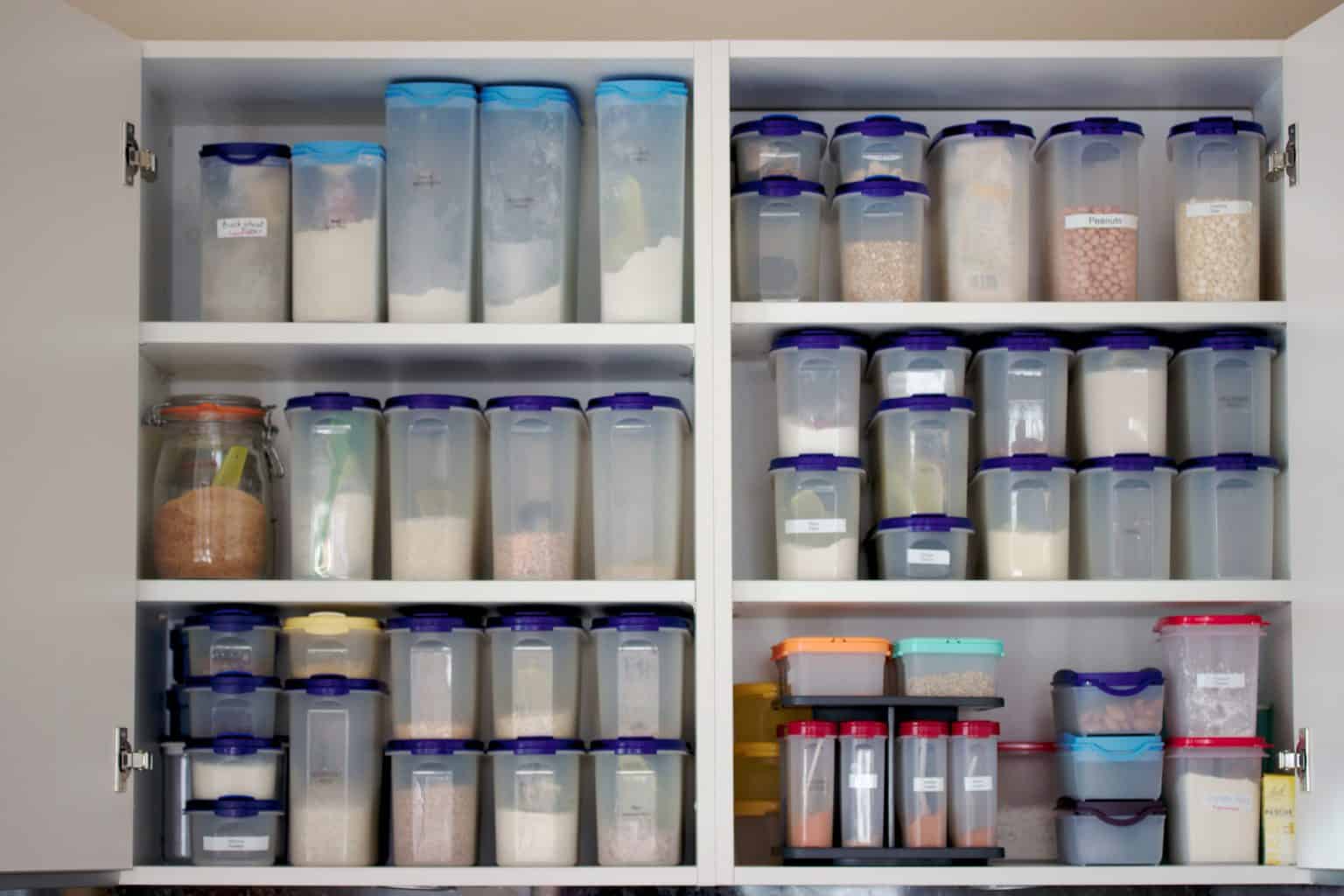
Spring is just around the corner, and the spring cleaning routine to declutter and clean the home tops the to-do list. The pantry is usually near the top of that list too. Here’s a look at pantry organization with Tupperware, why that storage system was chosen, and a system and hacks that apply to any storage system, whatever gets chosen in the end.
Table of Contents
Why Tupperware?
Disclosure: this post is not sponsored — all opinions and experiences shared here are personal. An earlier post covered fridge organization with Tupperware, chosen for practical reasons rather than brand loyalty — vegetables stored in Tupperware containers simply stayed fresh and crisp for longer. Tupperware fridge containers had already been in use for a while before the same approach was extended to the pantry. The practicality, the modular mates’ clean, pharmacy-like look, and the way they maximize space while keeping food storage easy to see over made this system tick every box personally. In Switzerland, a separate pantry or a huge kitchen isn’t always the norm — well-built, highly functional modular kitchens tend to fill that role instead.
Moving Brings Changes
The previous apartment’s kitchen was a single straight line with wall cabinets above the counter. The pantry system before that used glass jars, which proved impractical in that layout — storing one jar behind another got complicated, and the same food often ended up duplicated across 2 or 3 jars, since a 1-liter jar couldn’t hold a full kilogram of dry goods. It was time to upgrade, and the switch to Tupperware hasn’t been regretted since.
Pros and Cons of Tupperware Pantry Organization
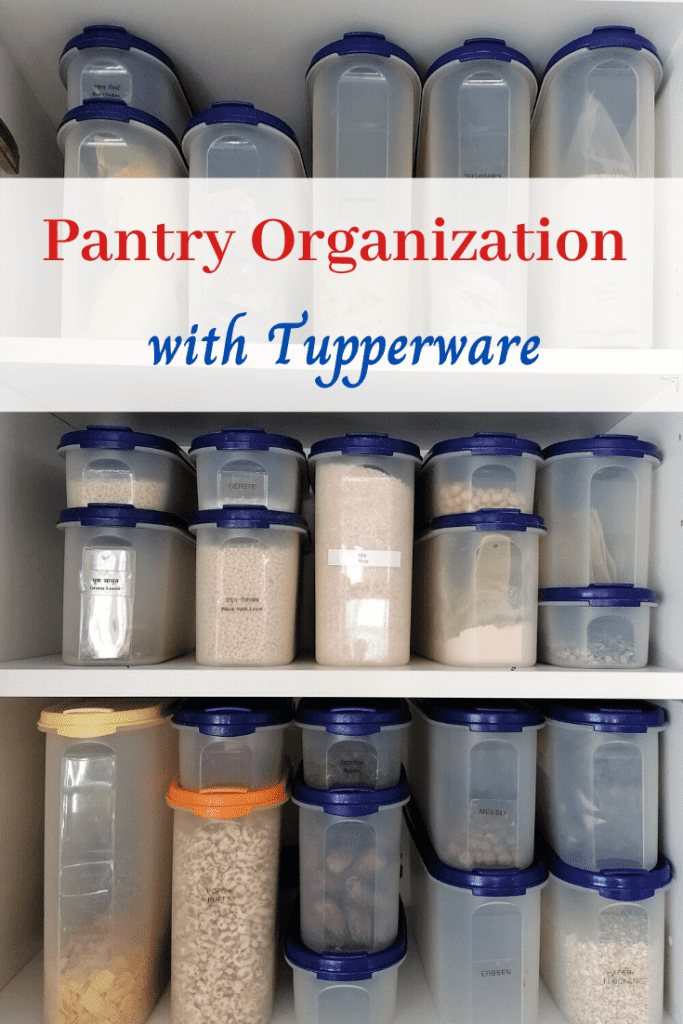
Supplies List
- Tupperware modular mates (various sizes)
- Glass jars, for oil, spices, salt & sugar
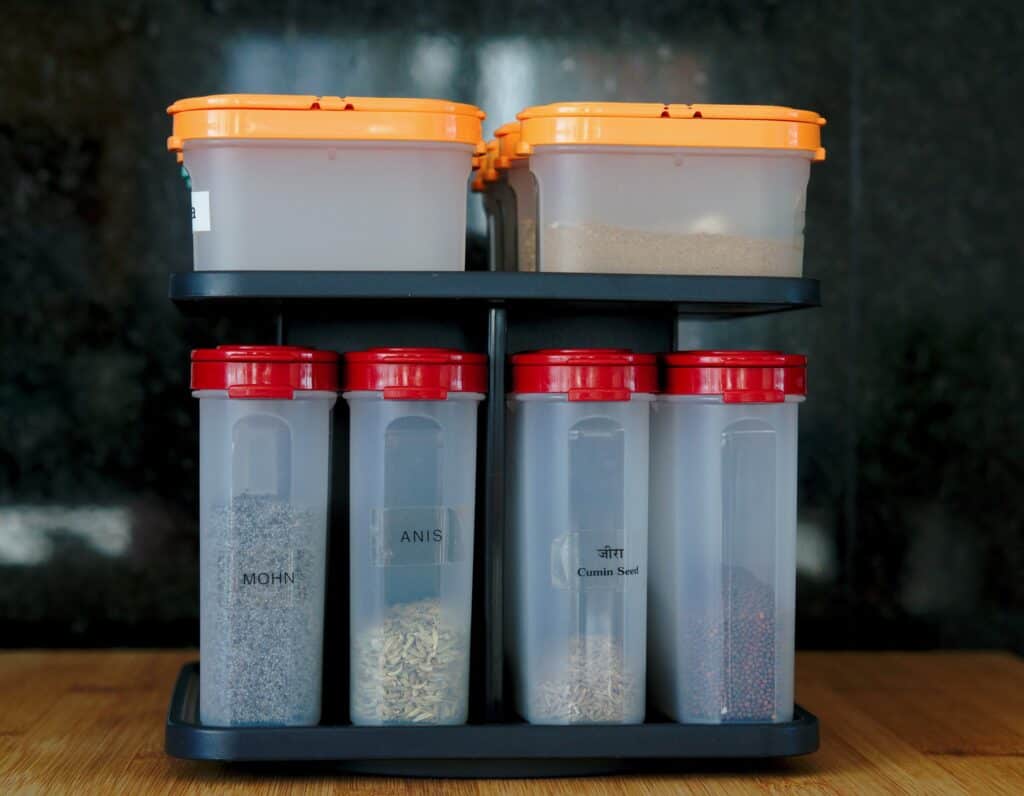
- Indian spice box
- Tupperware turntable spice rack
- Label maker
Instructions
User-Friendly Design:
Tupperware products are well thought out and genuinely easy to use.
BPA-Free and Lightweight:
Made from high-grade virgin plastic, they’re light to handle and free of BPA.
Stackable:
Easy to stack and store, which helps make the most of shelf space.
Dishwasher Safe:
A practical plus for everyday cleanup.
Space-Maximizing:
Even smaller pantries benefit from how efficiently these containers use the available space.
Fewer Duplicate Containers:
The modular mates hold larger quantities without needing to split food across several smaller containers.
A Range of Sizes:
Different sizes make it easy to buy dry goods according to how much is actually needed.
Replacement Lids:
A Tupperware consultant will often replace lids free of charge.
Resale Value:
These containers hold decent value on the second-hand market.
The Cons:
Tupperware isn’t perfect — it’s among the more expensive options on the market, and purchases are tied to buying through a consultant, which means engaging with a multi-level marketing model that isn’t to everyone’s taste. Plastic in general also has something of a bad reputation these days.
Sourcing the Right Containers
Getting a practical, workable pantry meant finding the right containers, and Tupperware was the choice — though not a cheap one. Watching for their promotions eventually paid off, since regular pricing on the deeper modular mates runs quite high. These particular containers measure 28cm deep and 9cm wide, sized just right for Swiss kitchen standards, fitting front to back in the cabinets to make the most of the available storage. About 10 sets of the deep size were ordered, along with smaller sets, building up the collection gradually whenever an offer came around. Each set comes in 5 different sizes, which makes it easy to match container size to how much of something typically gets bought in bulk versus smaller quantities.
Tips for Pantry Organization
Group by how you actually cook: categories like “bread baking” (all the grains and flour in one or two shelving units, with yeast or sourdough starter in the fridge) work well — but everyone’s system will look a little different, and that’s fine.
Keep daily essentials near the stove: oil, salt, and a spice box kept close to the hob saves extra trips back and forth while cooking.
Use a turntable for overflow spices: a Tupperware turntable spice rack works well for rarely used spices and overflow, though it does need room to turn — bigger compartments hold about 100 to 150g, smaller ones around 50g. A few wall-mounted IKEA spice racks can help pick up the rest.
What Not to Store in Tupperware
A few things are better kept out of plastic storage altogether:
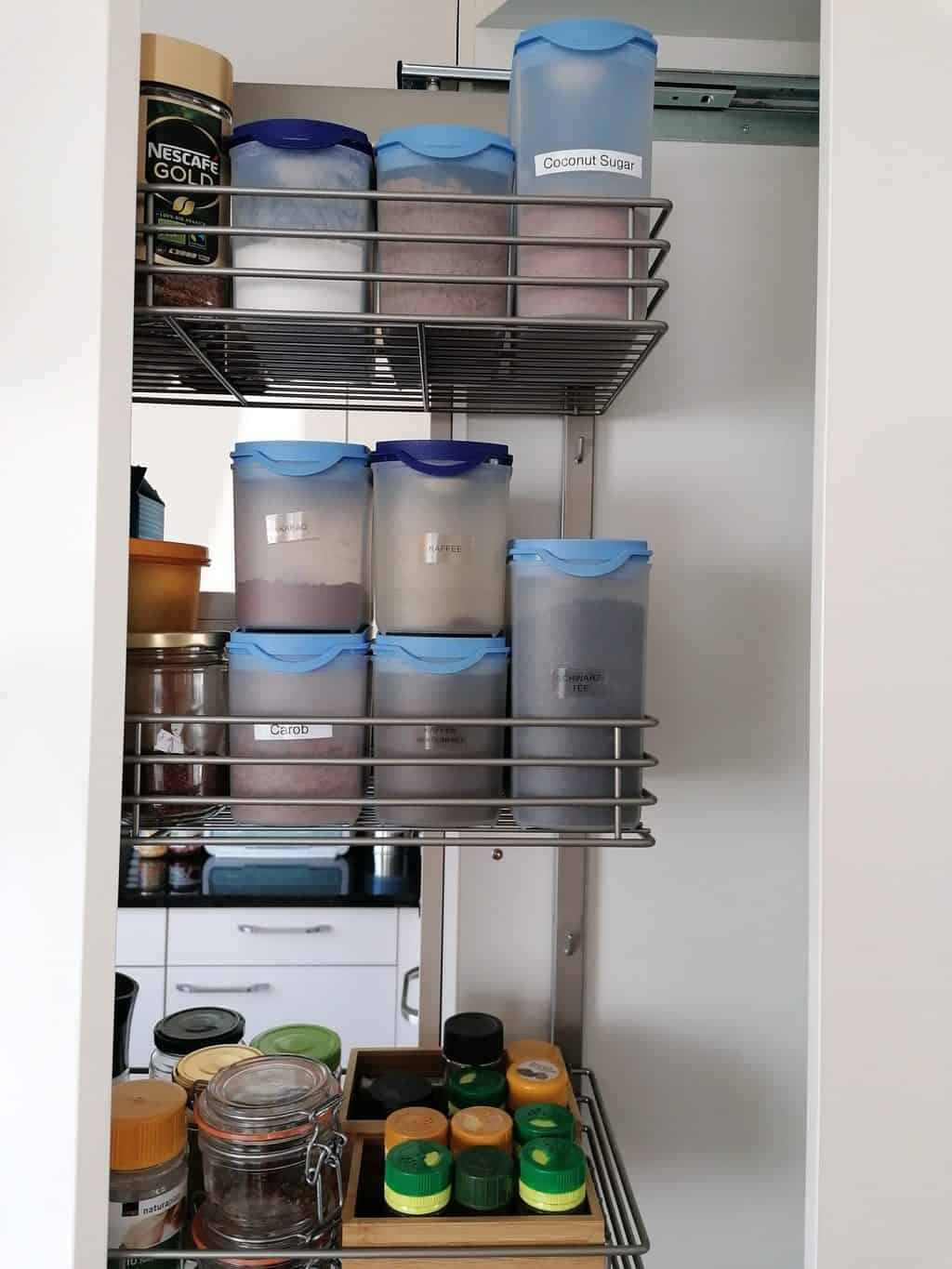
Oil: it leaches into plastic, breaking it down and releasing chemicals back into the oil — bottles are the better choice.
Powdered spices: these can discolor containers and leave lingering smells, so glass jars or a stainless steel spice box work better.
Salt: it tends to pick up humidity in plastic, so glass or ceramic is the better home for it.
Sugar: its rough, powdery texture can scratch plastic containers over time, so glass jars are used for it instead.
Why Labeling Matters
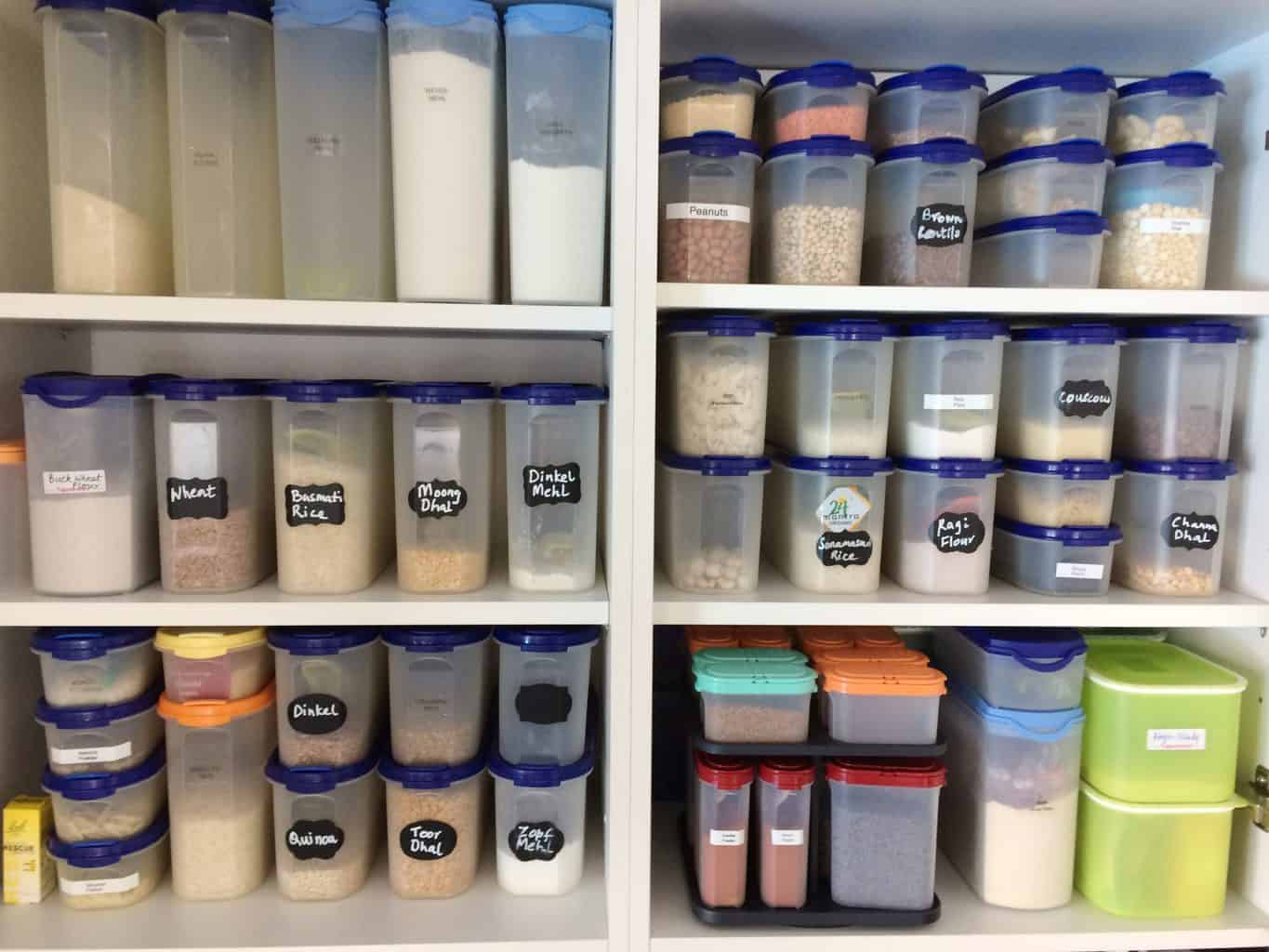
Even with Tupperware’s mostly clear containers, labeling still helps — mainly so other family members can find things easily when cooking alone. Similar-looking items, like different varieties of flour, are especially prone to mix-ups without a label. A use-by date stuck to the bottom of the container helps keep track of freshness, and cooking instructions on the back can help with foods that don’t get cooked very often. A label maker made re-labeling everything much easier; Tupperware also sells transparent labels, though not all of them turned out to be useful — customizing to fit personal needs works best.
Pantry Organization Maintenance
Maintenance is the real key to any organization system. A deep clean and declutter happens twice a year here, sorting out food no longer eaten due to dietary changes and making room for anything new. Empty containers get hand-washed, or run through a short dishwasher cycle — Tupperware is dishwasher safe, but hand washing tends to be preferred. During the half-yearly cleanup, downsized storage bins often get resold on the second-hand market, where the deeper containers especially hold good value. Tupperware also occasionally runs exchange offers, making it easier to swap old containers for new at a discount.
Watch the Video
Your feedback is valuable
Have some feedback you’d like to share? Leave a note in the comment section below! Thank you so much for visiting Vital Fair Living – we’re so happy you’re here! and thanks for taking the time to read this post. I would love it if you can share this post using the social media buttons.
Frequently Asked Questions
Yes, though hand washing is generally preferred here to help containers last longer.
Oil, powdered spices, salt, and sugar are all better kept in glass or ceramic — oil breaks plastic down, spices can discolor and leave smells, salt picks up humidity, and sugar’s texture can scratch the containers.
About twice a year works well, sorting out anything no longer needed and making room for new items.





Cool ideas! My wife would love this for sure.
Surely. Its very practical and durable too.
I just came across your wonderful website by chance! I have the same Tupperware pantry containers as you do and was looking for ideas on how to label them. I fitted out my pull-out pantry with Tupperware containers 15 years ago. Back then, pantry organisation was not really a big thing so there were not so many choices on the market, and Tupperware was certainly the most expensive. But I had friends who highly recommended them. I don’t think they are the prettiest containers, but they have really stood the test of time for me. I love how they are modular and how they stack so well. But most of all, they help me to keep organised in the kitchen. I didn’t like the idea of hosting Tupperware parties, but I somehow found a Tupperware consultant in Zurich who was happy to let me order via email. Although they cost a lot, these containers have definitely been one of the best purchases I have made!
I agree with you. I have spent thousands for my Tupperware containers, and my fridge organization is also easy with them. I never ever hosted these parties either, so got it from a consultant in Zug where we used to live 15 years back. They are really the best in the market. Glass is nice but bulky. I regret changing some of them last year. But now have to wait for an offer of these Superstorers. Have asked the consultant to give a shout out to me when its on offer. My daughter likes the glass though.
I see from your comment that you live in Zürich. Lets meet once, I love your blog too, mouth watering and great photos. I live outside of Zürich. My email chitra@swisshomegarden.com
Oh I just saw your other post, that you’ve now replaced your Tupperware with glass. That’s a shame, ha ha 😉 Glass jars definitely look much nicer, but I think they would be too heavy for storing large quantities of dry ingredients like flour or sugar. I do use glass jars for herbs and spices, though. But it’s a tricky balance to have a practical pantry which is also aesthetically pleasing. I would love to meet a fellow pantry organising fan one day!
Yes, I regretted it after I gave it away. But after trying out for 6 months, I changed it back excepting only 2 shelves. Happy compromise. Yes, they are heavy and not all of 1 kg fits in these jars. Tupperware is practical. Yes would be nice to meet one day. Lol Chitra