Top Reasons to get Berkey Water Filter
Disclosure: This post contains affiliate links, meaning, at no additional cost to you, we will earn a small commission if you click through and make a purchase. Learn more
- Home
- Home & DIY
- Product Review
- Top Reasons to get Berkey Water Filter
Switzerland already has some of the best tap water in the world, yet a Big Berkey water filter still earned its spot in this kitchen — after trying at least 5 different filtration systems over 25 years of marriage.
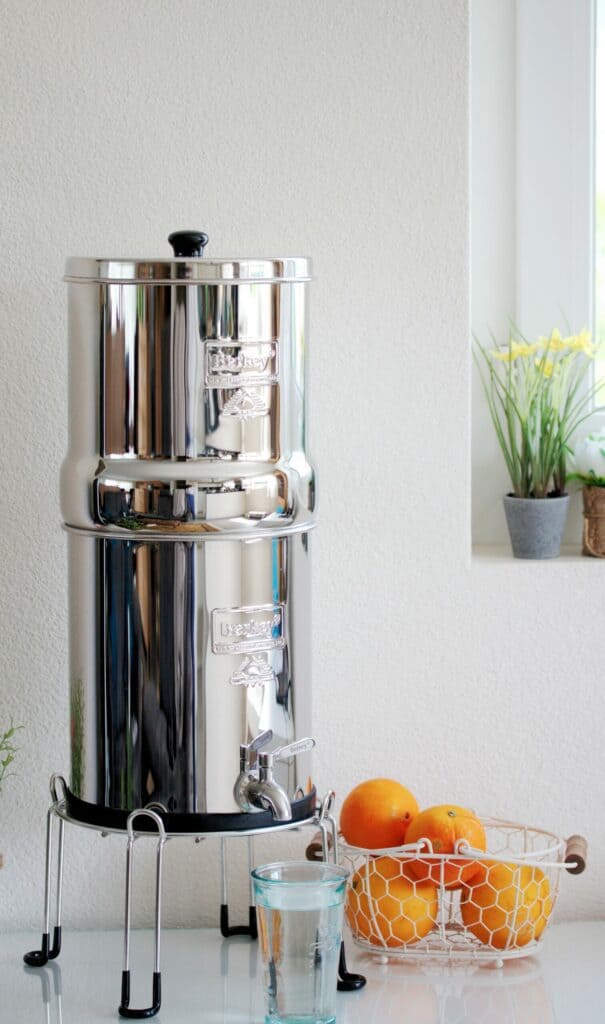
Switzerland can genuinely pride itself on supplying some of the best water quality for its residents. Yet filtering water still happened here, for other reasons. Curious to know the top reasons behind choosing a Big Berkey water filter for a small family?
In 25 years of marriage, at least 5 different water filtration systems got tried before finally settling on Berkey earlier this year.
Switzerland’s water supply has no added fluoride or chloride, genuinely some of the best water quality in the world. Even so, trace amounts of pesticides, birth control hormones, and other medication-related chemicals were a known concern, seeping into the water supply over time — and filtering that out mattered too.
While trying to conceive years back, a fertility expert’s suggestion led to switching to Aquasana for filtered water. But after moving to the present home, that system couldn’t be fitted to the kitchen faucet, since it wasn’t compatible. That search for a different system eventually led to Berkey, and the Big Berkey has been genuinely well loved since installing it earlier this year.
Table of Contents
1. Size
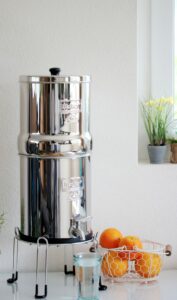
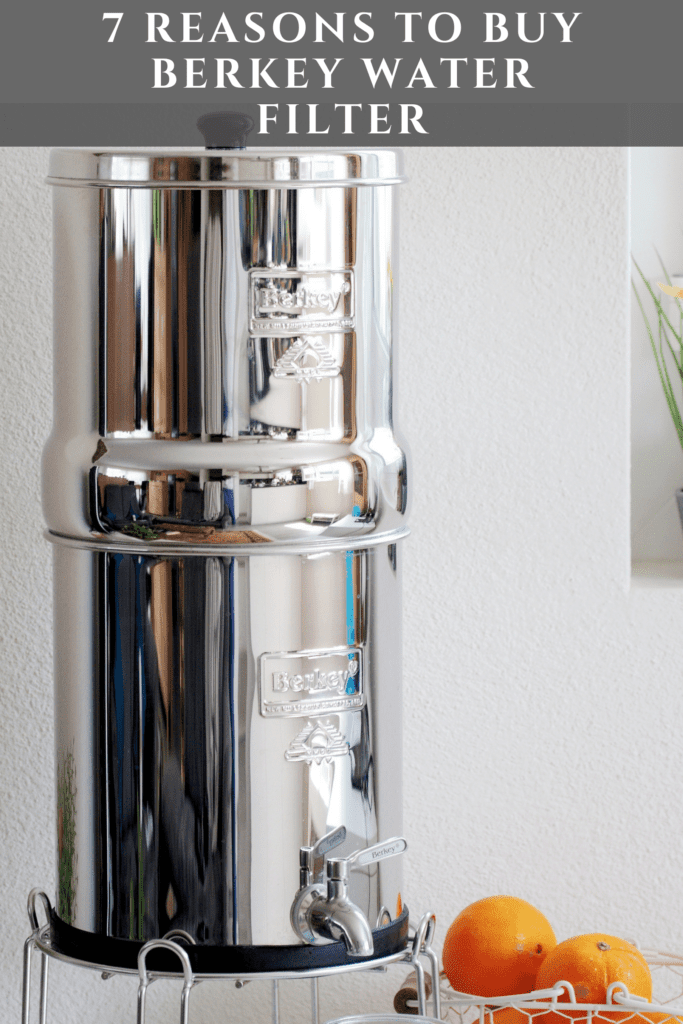
One of the main reasons for choosing the Big Berkey was not wanting something bulky sitting on the kitchen counter. As a small family of just 3, Berkey’s own sizing guidance helped narrow it down — they offer several sizes depending on personal needs.
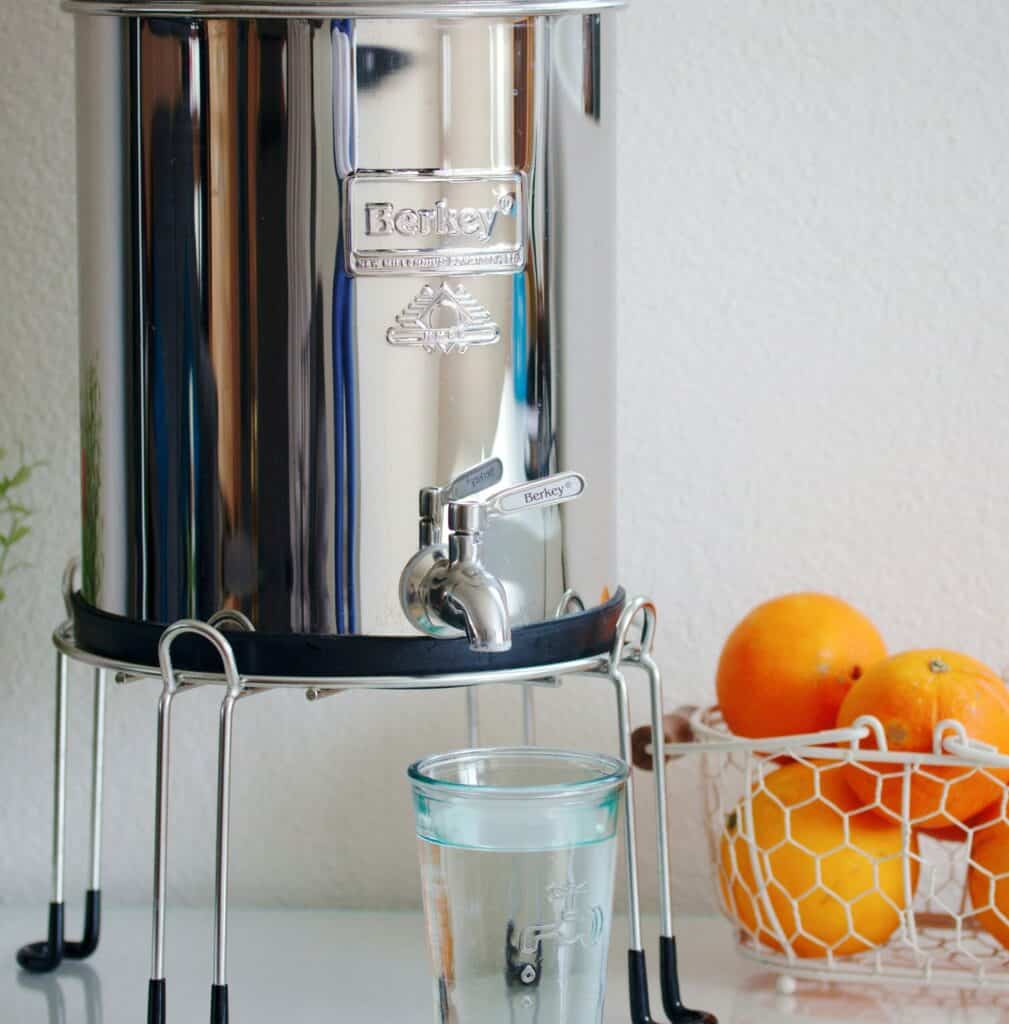
The Big Berkey holds 8.5 liters at a height of 50cm, which turned out to be just right. The price difference to the next size up wasn’t significant, but an extra 15cm needed accounting for, since a stand was wanted too — genuinely worth getting, since it also makes room to store a silver water cup underneath.
2. Price
After more than 2 decades of replacing so many water filters, cost had become a real concern. Filtered water from a Brita pitcher runs around 2 euro cents per liter, which added up to roughly 2,000 Swiss Francs over the years — not even counting the 2-plus years spent on the Aquasana countertop filter. Berkey’s own comparison charts are worth a look for anyone curious how the numbers stack up.
The Initial Investment
The initial cost came to 600 Euros, plus a stand, a stainless steel spigot, and red dye for testing. An additional CHF 80 in customs duty added to the total, though shipping from the UK was free. All these costs may sound steep, but good water is genuinely worth treating as an investment in health.
3. Filtering Quality
Fluoride and chloride weren’t really the concern, since Switzerland’s water supply is generally very good on that front. The real motivation for filtering was excess limescale in certain parts of the country — a special system installed on the main pipes helps extend the lifespan of appliances by changing the water’s ionic composition, but it doesn’t actually filter the water, so limescale deposits still built up in pots and kettles. Brita was used for cooking water specifically to avoid that.
The bigger concern, though, was birth control hormones, pesticides, and medication residue potentially leaching into the water supply — not something to risk with a child’s hormonal balance and overall health. The Big Berkey met every requirement on that front. According to the manufacturer, it filters out viruses and bacteria along with chemicals that most other filters miss. A good filter for the garden stream was also part of the appeal, useful in case of emergencies.
How to Do the Red Dye Test
Supplies List
- 1. Size
- 2. Price
- 3. Filtering quality
- 4. Eco-friendly
- 5. Portable
- 6. No electricity needed
- 7. Easy to test
Instructions
4. Big Berkey Is Eco-Friendly:
Filter cartridges needed regular replacing with both Brita and Aquasana — Brita monthly, Aquasana every 6 months — which genuinely adds up in landfill waste over time. Brita is also made of plastic, and the pitcher itself became hard to clean and eventually needed replacing too, on top of models changing over time, which meant staying on top of which cartridges still fit. Berkey’s filters, by contrast, only need replacing after about 10 years, and the stainless steel container holds up for the long haul. The Big Berkey’s 8.5 liter capacity covers daily needs easily, sometimes filtered twice a day since water is the only drink in the house.
Why It’s More Ecological:
The Big Berkey is made of high-quality stainless steel and is easy to clean, with no electricity required — it’s a simple carbon filter. Unlike systems such as reverse osmosis, which rely on plastic components and waste a lot of water in the process, Berkey holds up well on the ecological front too.
5. Portable Water Filter:
Not wanting to invest in a fixed, extensive water purification system in case of a future move was another real consideration in Berkey’s favor. It’s easy to transport, and filters are readily available online. A smaller Berkey model exists for travel too, though a separate Katadyn hiker filter already covers that need here.
6. Requires No Electricity:
Not needing electricity to filter water was another real criterion, since reverse osmosis and some extensive filtration systems do require it. Early in marriage, living in a remote part of India meant filtering river water with something similar to a Berkey — it did the job at the time, but it doesn’t compare to the real thing.
7. Easy to Test the Filters:
Many water filters are difficult to verify are actually working properly. Berkey makes this easy with a red dye test, letting anyone confirm the filters are doing their job.
How Often to Change the Berkey Filters
Due to health regulations, artificial red food color is banned in the EU and UK, so the test instructions differ from the American Berkey assembly sheet. Berkey Europe recommends using only natural red food color sold in small 38–50ml bottles, without added glucose, sugar, or thickening agents — available at most major supermarkets or Asian food shops, avoiding gel-based colorings.
Completely fill the upper chamber of the Big Berkey with water, then add a quarter teaspoon or less of red food coloring, stirring well (a half teaspoon for an Imperial or Crown Berkey). The water should take on a slight pinkish tinge. If the coloring gets completely filtered out, the system is working properly — if not, check that the wing nuts on the elements and the blocking plugs are securely tightened, then re-run the test.
What Big Berkey Filters Out
Filters out over 99.99% of chlorine, bacteria, and viruses: along with lead, VOCs, THMs, lindane, benzene, and atrazine, according to the manufacturer — and over 96% of lead specifically.
Doesn’t remove fluoride by default: the standard Black Berkey filters need the additional PF-2 fluoride filters for that, sold as a discounted accessory — not needed here, since Swiss tap water is already fluoride-free.
Hormone removal isn’t officially tested by Berkey: though related carbon filter studies suggest a high likelihood of effective removal.
Doesn’t remove limescale: limescale is harmless on its own, just mineral buildup — the filter gets cleaned about once every 2 months, and a little vinegar helps clear limescale from kettles too.
How to Clean the Berkey
Each Black Berkey filter lasts up to 11,350 liters, or 22,700 liters per set of 2. At around 38 liters used per week here, that works out to roughly 600 weeks — more than 11.5 years of clean water from one set of filters.
When and How to Change the Water
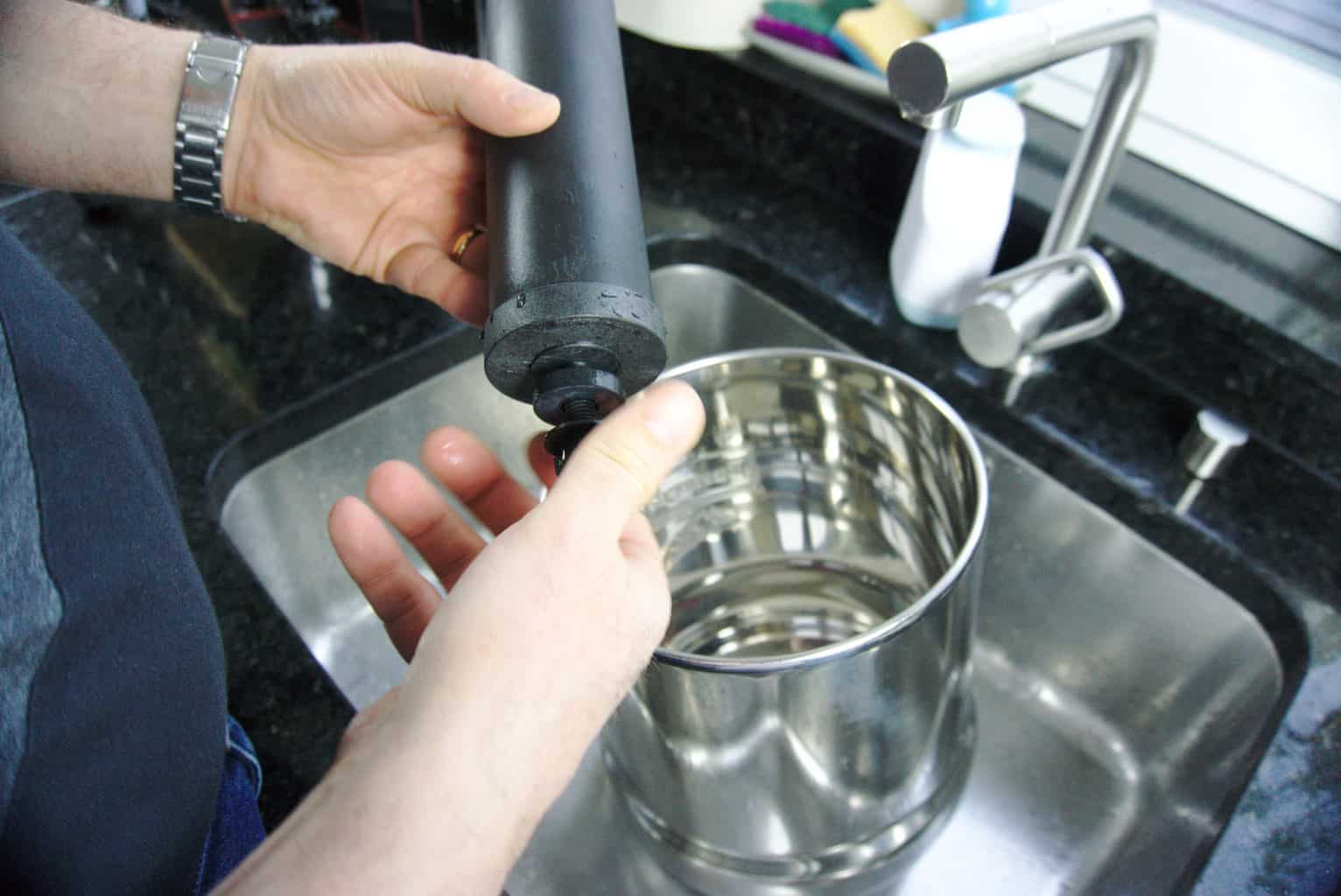
Cleaning the Berkey is genuinely simple: empty all the water first, then unscrew the wing nuts to remove the filters. A light vinegar solution helps clear any limescale deposits, brushing the container with a soft sponge, then rinsing thoroughly under cold water. This step can be skipped entirely for anyone without a hard water problem.
Health Benefits
How often the water needs changing depends on usage — the Berkey gets filled about twice a day here. To get the last bit of water before refilling, tipping the filter forward slightly toward the spout helps drain it fully.
Disclosure: This post contains affiliate links, meaning, at no additional cost to you, we will earn a small commission if you click through and make a purchase. Learn more
This purchase happened well ahead of the lockdowns and economic disruption that followed — a gut feeling back in December to order quickly meant it arrived within a week, right as Berkey started facing supply delays of its own. Installed in January, it’s been in daily use ever since.
Watch the Video
Your feedback is valuable
I hope this post on the reasons why a Big Berkey water filter was chosen was useful to you. Do have some feedback you’d like to share? Leave a note in the comment section below! Thank you so much for visiting Vital Fair Living – we’re so happy you’re here! and thanks for taking the time to read this post. I would love it if you can share this post using the social media buttons.
Frequently Asked Questions
Not by default — the standard Black Berkey filters need the additional PF-2 fluoride filters for that, sold as a discounted accessory alongside every Berkey system.
No — limescale is simply mineral buildup and is harmless on its own, though the filter benefits from a light cleaning about once every 2 months in hard water areas.
Up to 11,350 liters each, or 22,700 liters per set of 2 — more than 11.5 years of use at typical household consumption levels.