Disclosure: This post contains affiliate links, meaning, at no additional cost to you, we will earn a small commission if you click through and make a purchase. Learn more
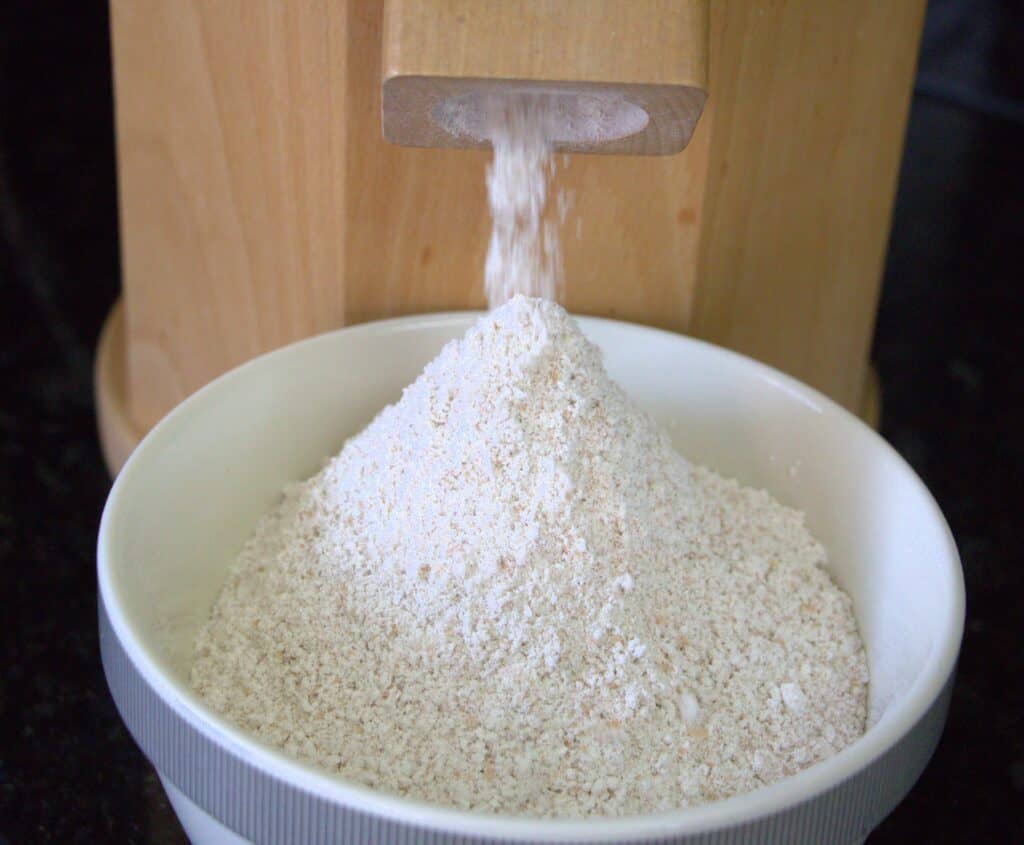
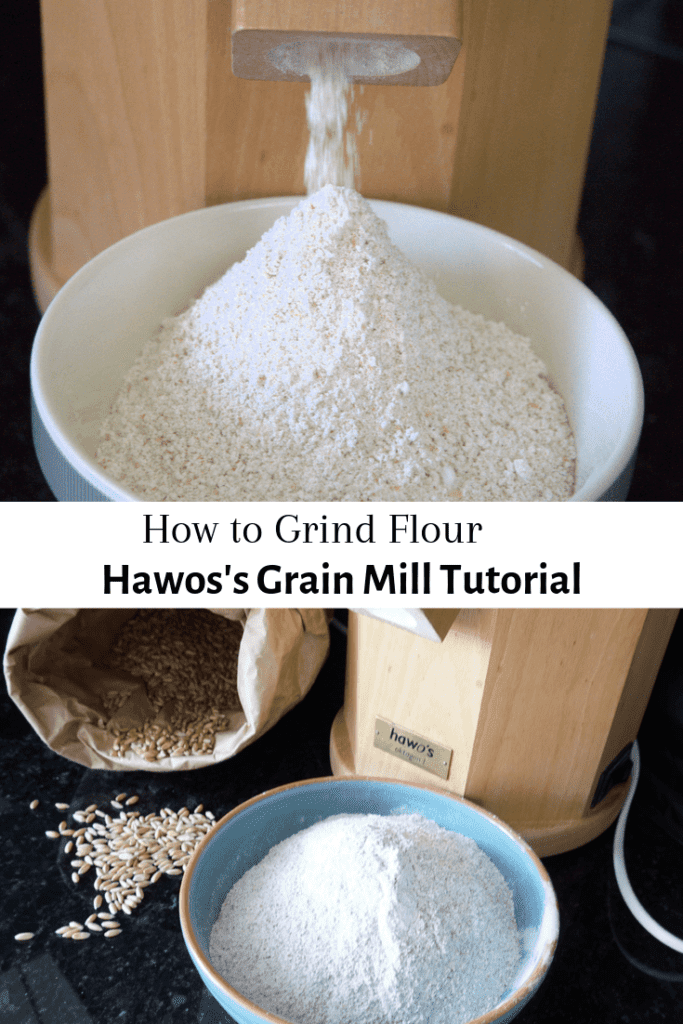
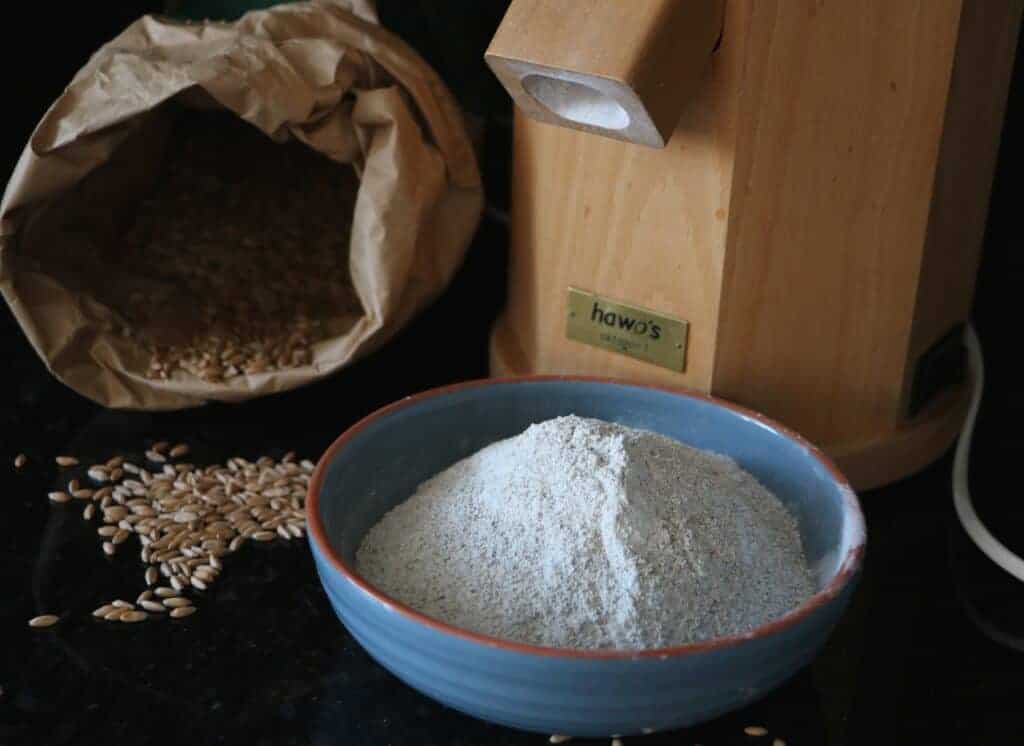
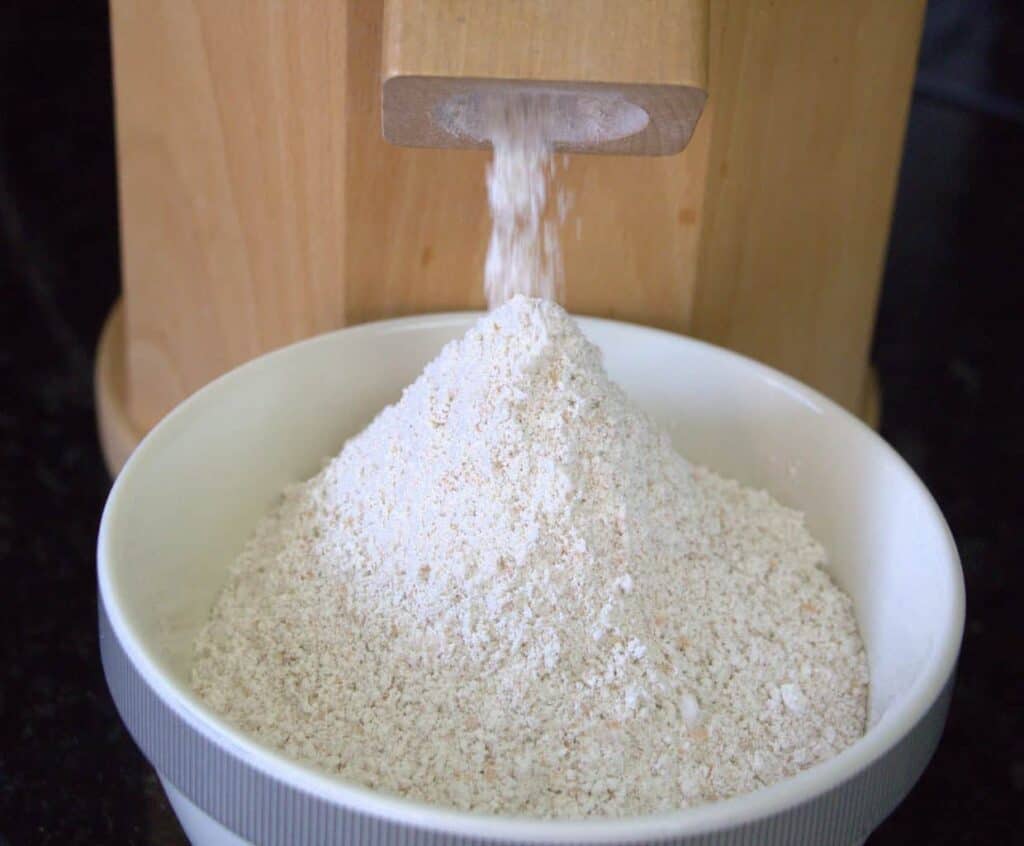
Proud owners of a Hawos Oktagon stone grain mill for more than a decade, grinding flour at home for breads, cakes, and pizzas ever since — not a cheap mill to buy, but one that pays off many times over.
Freshly milled flour has many benefits. This has been a household with a Hawos Oktagon Stone Grain mill for more than a decade, grinding flour for breads, cakes, and pizzas, among other things, since first getting it. This mill isn’t cheap to buy, but in the long run it pays off with the many benefits of freshly ground flour right at your fingertips.
Table of Contents
Reasons for Choosing the Hawos Oktagon Grain Mill
After debating for years about getting a grain mill, the plunge finally got taken more than a decade back with a Hawos stone grain mill, model Oktagon 1 — no regrets since. Before that, it was just a catalog and a lot of dreaming, since the high price keeps these mills out of most households. Even back then it was a big investment, easily costing around CHF 750 or more for a good one in Switzerland.
A few of the most noteworthy reasons for choosing the Hawos Oktagon:
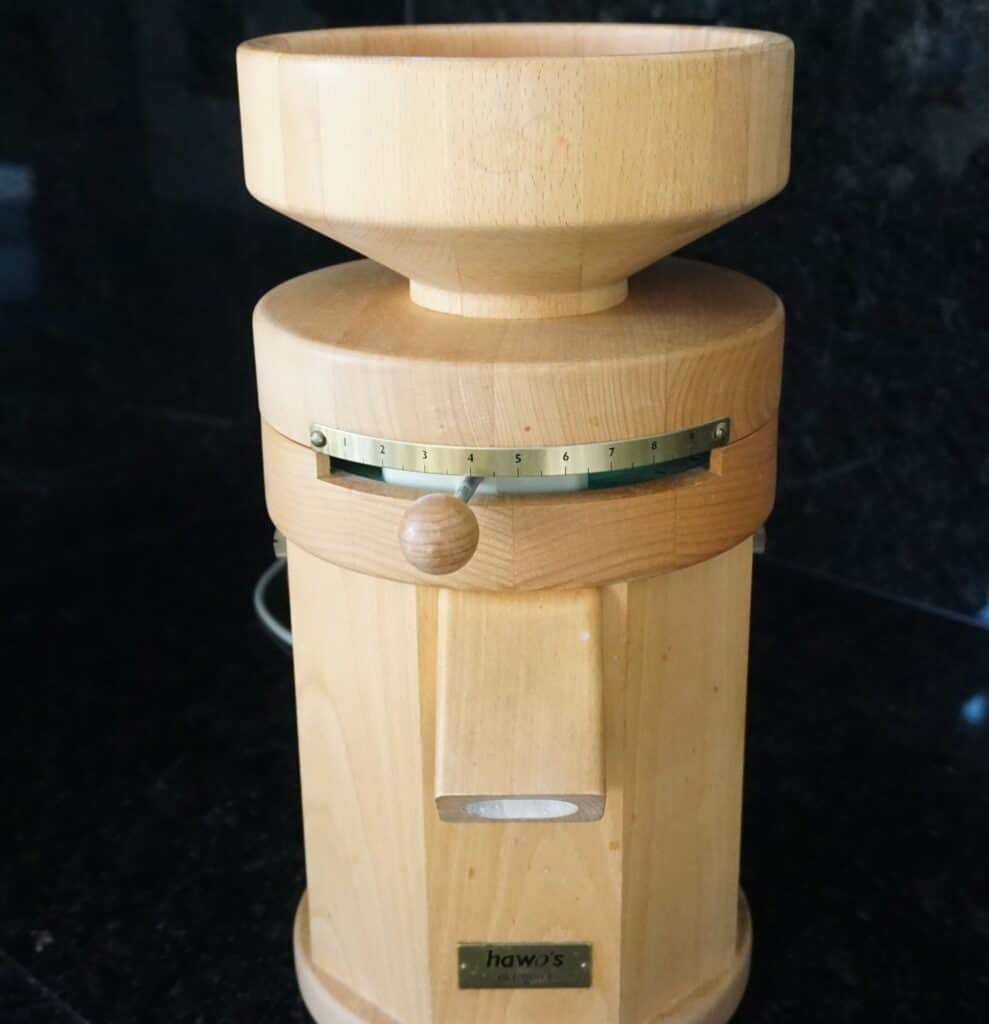
The beautiful octagonal design.
Natural materials like steamed beech wood, with genuinely perfect craftsmanship.
The grinding noise stays relatively low, even at lower settings — quieter than most mills.
A powerful 360/600 Watt motor that likely helps with quicker grinding.
A genuinely compact design that also works as a piece of kitchen counter decor.
Shop the Different Hawos Options
Disclosure: This post contains affiliate links, meaning, at no additional cost to you, we will earn a small commission if you click through and make a purchase. Learn more
Set the fineness between 1 and 9 using the adjusting lever. When moving the lever from 9 down to 1 or lower, the mill should either be running, or the grinder should be empty. Going above the recommended fineness for a given grain risks the grindstones clogging — pay attention to the milling noise, since a noticeable drop in sound usually means the stones are starting to clog. If that happens, adjust to a coarser setting and continue milling.
Step 3 – Turn Off Once Finished:
Turn off the mill once all the grain has been ground. You’ll hear the grindstones rubbing against each other once there’s no more grain left inside.
Mill Feed Settings by Grain Type
Because of the high degree of precision involved, the threading for the fine setting always needs a small amount of play — this gets neutralized once milling pressure is applied between the two grindstones. Since different grains have their own hardness, each one exerts a different milling pressure, which is why the manufacturer recommends different settings for different grains.
Mill Feed
Setting
Wheat
1
Rye
1.5–2
Spelt
1.5–2
Barley
2.5
Oats
2.5
Millet
1
Sweet corn
0
Durum wheat
0
Rice (not parboiled)
1
Buckwheat
1
Green spelt
1
Flax seed (1:1 with wheat)
2
Chick peas
1.5
Green peas
1.5
Nutritional yeast flakes
1.5
Quinoa
0.5
Amaranth (pour in slowly)
0
These settings come from extensive testing carried out by Hawos, since different grains vary considerably in fat and fiber content, endosperm structure, and more. The values are approximate and depend somewhat on the moisture content of the grain in question.
Tips for Using a Stone Grain Mill
Watch the sound, not just the setting: if the grinding noise drops noticeably, the stones are likely starting to clog — switch to a coarser setting rather than pushing through. Match the setting to the grain: wheat, spelt, and rye all behave differently under the grindstones, so it’s worth following grain-specific settings rather than a single default. Consider buying pre-owned: a good, nearly new secondhand mill can come at a real discount compared to buying new.
Technical Specifications
Specification
Oktagon 1
Housing
Solid beech
Grinding capacity, wheat (fine)
ca. 125 g/min
Grinding capacity, wheat (coarse)
ca. 250–300 g/min
Hopper capacity (wheat)
ca. 1100 g
Grindstone diameter
100mm (corundum ceramic)
Weight
8.8 kg
Motor output
360 W
Mains voltage
230V (110V available)
Height allowance for bowls
16 cm
Footprint (W x D x H)
200 x 200 x 410 mm
Surface treatment
Linseed oil varnish
Warranty
10 years
Source: hawos.de
Why This Mill Was the Right Choice
Hawos stone grain mills have been the winner of stone mill tests in their category according to German consumer tests, which made this feel like a worthwhile investment. This particular mill has been used for more than 12 years without any problems. It was bought almost new but technically secondhand, at what was the cheapest price available at the time — CHF 600 for an almost-new mill. The many benefits reaped from grinding flour at home have been worth writing about separately too, in a follow-up post on the top 3 benefits of milling your own flour.
Watch the Video
Your feedback is valuable
Thank you so much for visiting Vital Fair Living – we’re so happy you’re here! and thanks for taking the time to read this post.
Frequently Asked Questions
How Do You Know When Grindstones Are Starting to Clog?
A noticeable drop in the milling noise usually signals the grindstones are starting to clog — switching to a coarser setting resolves it.
Why Do Different Grains Need Different Mill Settings?
Grains vary considerably in fat and fiber content and overall hardness, which changes how much pressure they put on the grindstones — following grain-specific settings gives more consistent results.
Is a Stone Grain Mill Worth the Investment?
Yes, according to firsthand experience — this particular mill has been used for over 12 years without issues, and Hawos mills have also been recognized as test winners in their category by German consumer tests.
This has been the best purchase I ever made. I use it almost everyday. Hawos is really very good, mine is almost 15 years old now. Check out my video to it too.
Yes, we have used it for milling wheat for Chapati. It works very well. I used the setting 3 for finer flour you can go as low as 2, but it takes longer. It won’t be as fine as shop bought flour, as Industrial flour is usually sieved. You will love the taste of freshly ground flour for your Roti’s. I only use milled flour for Chapati’s.
Recently I started grinding rice too and it works. I will post a video soon on how to clean the mill on the youtube channel. It has to be edited, but I am too busy now.
Thank you so much for your reply Chitra. We have tried the mill for a few different grains and lentils (chana dal, urad dal etc.). The chapati atta from wheat though did not go that well as there was a lot of fiber left in the atta. The reason being wheat grains were of ‘ soft wheat’ variety. Perhaps using a hard wheat variety such as durum may give us a different result. Unfortunately there no suppliers for a smaller scale purchase here in the Netherlands. Could you kindly share the links to the supplier that you use in your blog?
I usually buy mine from Germany and they ship it here. I can give you their address. http://www.cosmoveda.de. I also buy all my Indian spices, lentils etc from there. They ship all over Europe. Since you are within EU, there may be no customs duty. Their quality is good and its all organic too. Don’t know about their wheat, since I stopped using wheat long back. But give it a try. Prices are also OK. I also buy my grains in Switzerland from the health food stores. You can try the Health food stores in NL. Surely they have good quality. Rapunzel and Demeter are top quality in everything related to food within Europe.






I am interested in grinding my own grains. I have a Hawo’s mill and would like to learn more about milling.
This has been the best purchase I ever made. I use it almost everyday. Hawos is really very good, mine is almost 15 years old now. Check out my video to it too.
good
Thanks. We really love this mill.
Hi, we bought Hawos Queen 1 We are figuring out the use. Have you tried milling wheat for Chapati / Roti flour? How was your experience?
Yes, we have used it for milling wheat for Chapati. It works very well. I used the setting 3 for finer flour you can go as low as 2, but it takes longer. It won’t be as fine as shop bought flour, as Industrial flour is usually sieved. You will love the taste of freshly ground flour for your Roti’s. I only use milled flour for Chapati’s.
Recently I started grinding rice too and it works. I will post a video soon on how to clean the mill on the youtube channel. It has to be edited, but I am too busy now.
Thank you so much for your reply Chitra. We have tried the mill for a few different grains and lentils (chana dal, urad dal etc.). The chapati atta from wheat though did not go that well as there was a lot of fiber left in the atta. The reason being wheat grains were of ‘ soft wheat’ variety. Perhaps using a hard wheat variety such as durum may give us a different result. Unfortunately there no suppliers for a smaller scale purchase here in the Netherlands. Could you kindly share the links to the supplier that you use in your blog?
I usually buy mine from Germany and they ship it here. I can give you their address. http://www.cosmoveda.de. I also buy all my Indian spices, lentils etc from there. They ship all over Europe. Since you are within EU, there may be no customs duty. Their quality is good and its all organic too. Don’t know about their wheat, since I stopped using wheat long back. But give it a try. Prices are also OK. I also buy my grains in Switzerland from the health food stores. You can try the Health food stores in NL. Surely they have good quality. Rapunzel and Demeter are top quality in everything related to food within Europe.
Thank you for the detailed information!! Indeed helpful!