Spelt Pizza Recipe from Scratch
Disclosure: This post contains affiliate links, meaning, at no additional cost to you, we will earn a small commission if you click through and make a purchase. Learn more
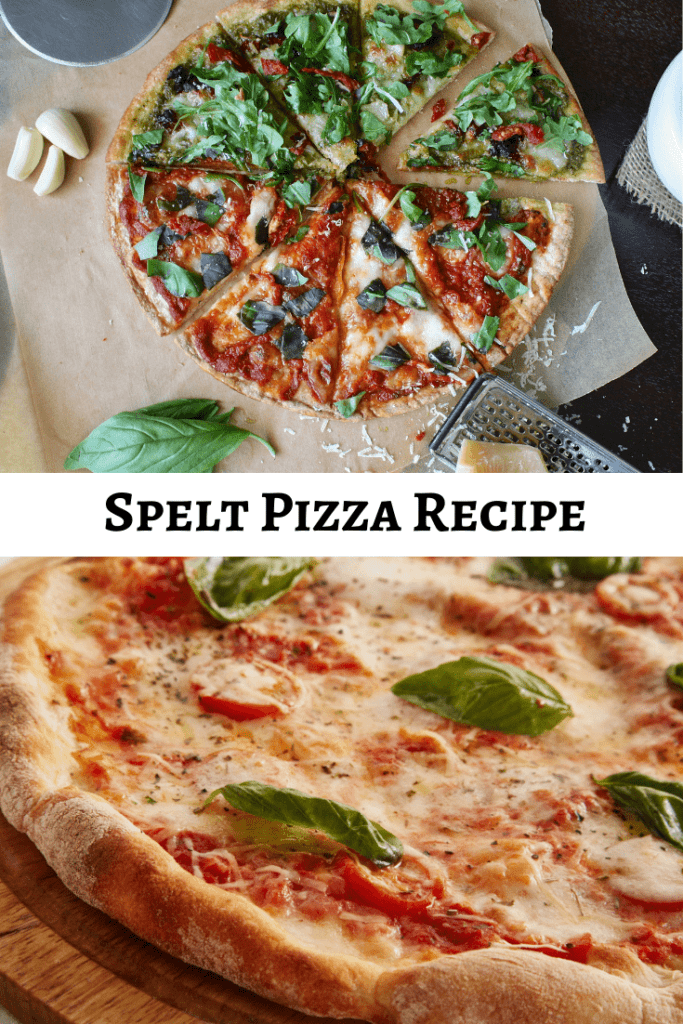
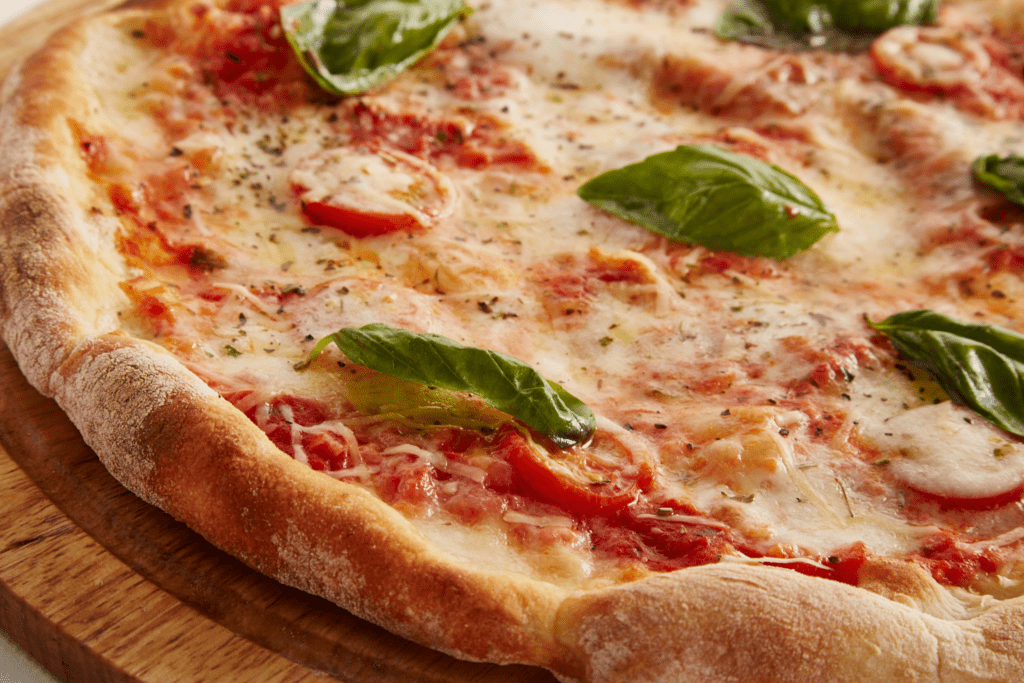
This spelt pizza, made from scratch with freshly milled spelt grains, was born from wanting more control over the salt and fat that goes into commercial pizza — and it tastes better for it.
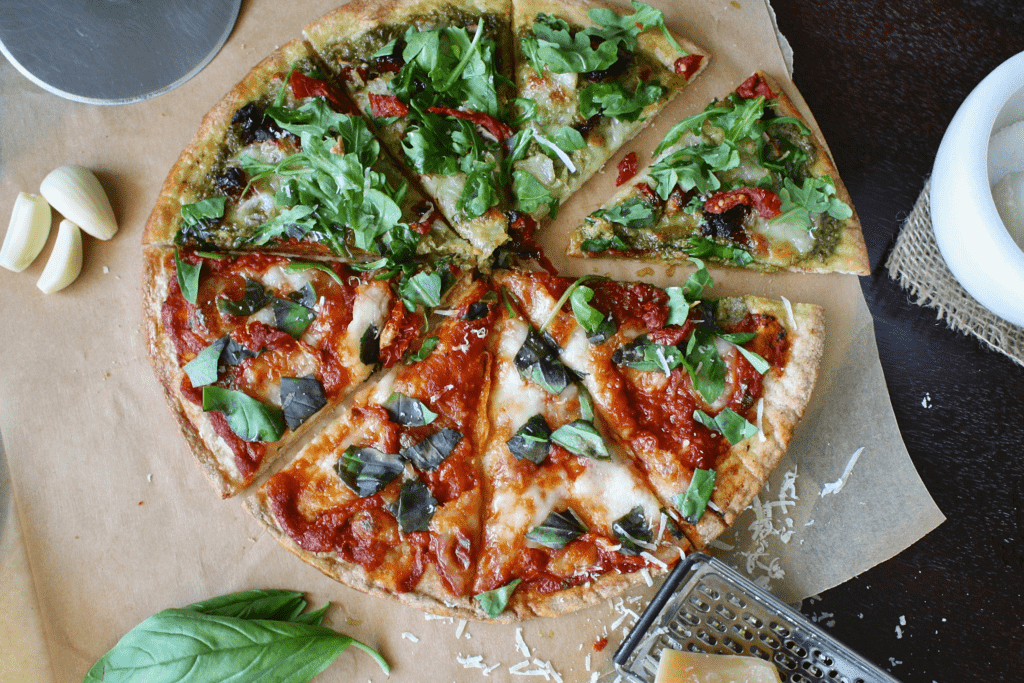
Pizza is a hot favorite and a go-to meal for many, with the convenience of a takeaway. To tell you the truth, the first pizza I ever ate was one I made from scratch. This spelt pizza recipe from scratch is so easy to make and delicious, thanks to freshly milled spelt grains.
With the rise of fast food convenience, pizza is now just a dial or click away — but ready-made and fast-food pizzas have earned some bad rep for their unhealthy ingredients. Mass-produced pizzas made to suit commercial tastes tend to run high in salt, unhealthy fats, and sometimes sugar, which is why pizza has always been baked from scratch here, to suit our family’s taste and needs.
Pizza was one of those dishes learned alongside bread, from cookbooks and experimenting. Since I’m vegetarian, the toppings have been adapted too — pizza isn’t much different from basic bread baking technique, at its core just a leavened wheat-based dough topped with tomatoes, cheese, and other ingredients, baked at high temperature.
Table of Contents
More Control Over Salt and Fat
Making pizza from scratch means having real control over the salt and fat that go into it — and with good quality, fresh ingredients, it’s entirely possible to make it both healthy and tasty. Freshly ground flour from a home grain mill is used for all the baking here, and it’s a gadget worth having if you want breads and pizzas that taste better than what you’d get at a restaurant or fast food joint. Spelt flour also has a nutty flavor, which is another reason this spelt pizza tastes better than a regular one.
Naturally Better Portion Control
Because whole grains are being milled here rather than refined flour, this pizza tends to be more filling in smaller portions — real portion control, in contrast to working through an entire takeaway box and still feeling hungry afterward.
Tools you may need
Disclosure: This post contains affiliate links, meaning, at no additional cost to you, we will earn a small commission if you click through and make a purchase. Learn more
How to Make Spelt Pizza from Scratch?
Ingredients List
- 500g spelt flour (or grains to mill)
- 10g salt, 15g fresh yeast, 10g sugar
- 1 tbsp oil, water as needed
- Tomato puree, garlic, olive oil
- Basil, oregano, thyme
- Mozzarella & toppings of choice
Cooking Instructions
Activate the Yeast:
Mix the yeast and sugar with a little water and set aside to bubble.
Mix the Dough:
Mill the grains if using whole spelt, then mix the dry ingredients — keeping the salt to one side, since salt in direct contact with the yeast mixture will kill it and stop the dough rising. Knead well, adding water gradually, until the dough comes together and pulls away from the sides of the bowl. Spelt is low in gluten, so avoid adding too much water at once.
First Rise:
Cover and let rise in a warm place for about 1.5 hours. Use this time to prepare the sauce and toppings.
Make the Sauce:
Heat the olive oil in a heavy-bottomed pan, add the asafoetida, and crush the garlic directly into the oil. Stir in the tomato puree and cook over low heat. Add the tomato paste concentrate to thicken, then reduce the heat further and let it cook down. Once thickened, stir in the dried herbs, pepper and fresh herbs, and season with salt right at the end, cooking just briefly after.
Prep the Toppings:
Slice the olives into thin rings and cube or shred the cheese. Chop the vegetables and sauté briefly in a little olive oil, then set aside.
Preheat:
Heat the oven to its highest temperature, including a pizza stone if using, and let it heat for a further 15 minutes — this is what gives the crust its texture.
Shape and Top:
Divide the dough into 3 or 4 portions and roll out on a well-floured surface to about 0.5cm thick. Poke the base with a fork, then spread the sauce evenly — this helps the toppings distribute evenly rather than sliding off if the base puffs up. Add toppings and sprinkle with cheese.
Bake:
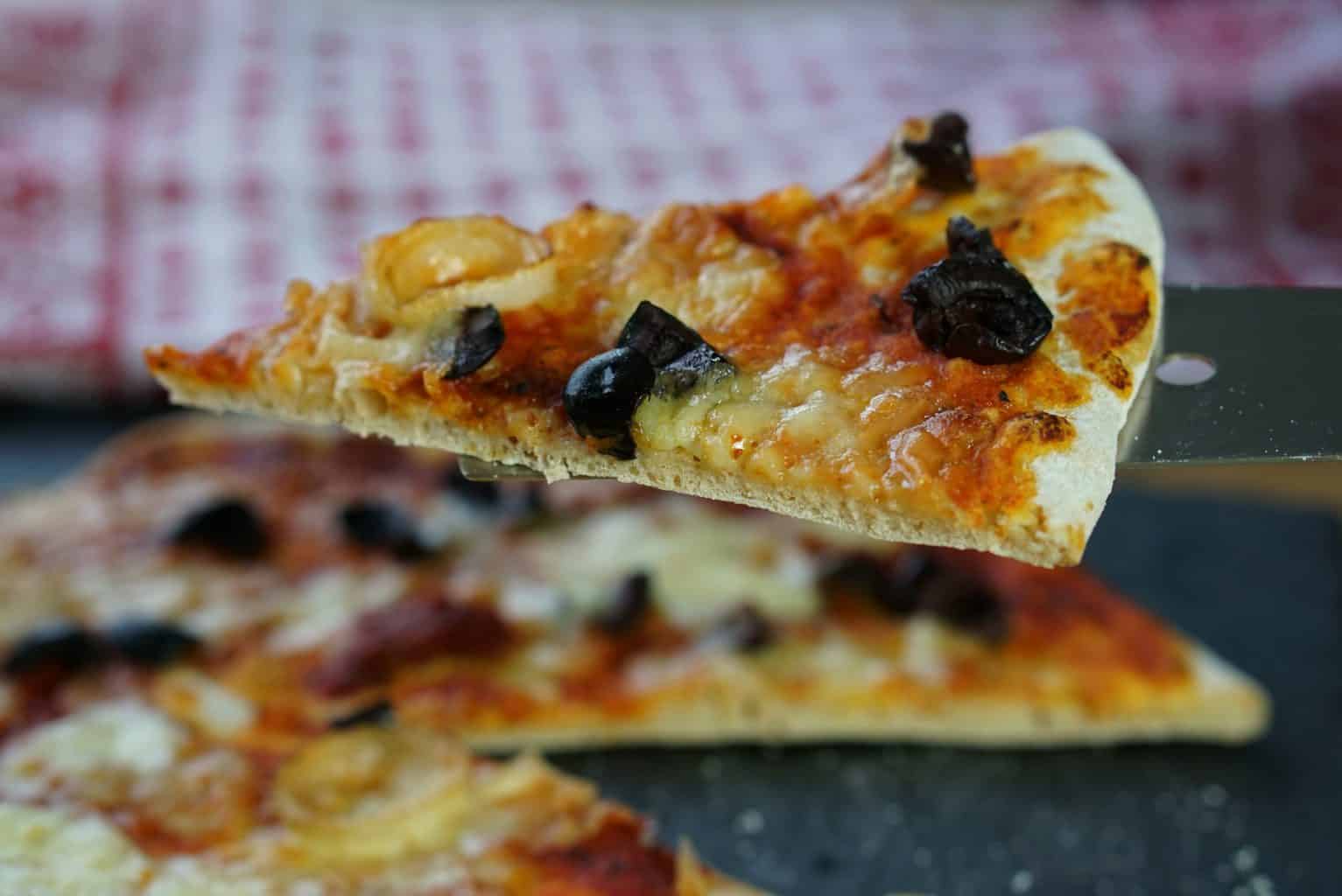
Bake for about 10 minutes for a Margherita (cheese, sauce and olives), or a little longer with vegetables added. If using pineapple, squeeze out the juice first — the moisture can make the base soggy otherwise.
Serving Suggestions
Serve the pizza hot, straight from the oven. Try it:
With a fresh salad: any salad on hand rounds out the meal.
Garnished with fresh herbs: and rocket leaves if you have them.
Classic Margherita style: just sauce, cheese, and olives, kept simple.
Tips for Spelt Pizza from Scratch
Keep salt away from yeast: salt in direct contact with the yeast mixture will kill it and stop the dough from rising.
Go easy on water: spelt is low in gluten, so add water gradually rather than all at once.
Preheat thoroughly: heating the oven (and pizza stone, if using) at the highest setting for a full 15 minutes is what gives the crust its texture.
Squeeze pineapple first: if using pineapple as a topping, squeeze out the juice before adding it — otherwise the base can turn soggy.
Why Spelt for the Pizza Base?
Traditional pizza dough uses strong white wheat flour for its high gluten content and easy shaping. Wheat has been eliminated from this kitchen for some time now due to gluten intolerance, with spelt taking its place instead — spelt has a lower gluten content, and the gluten it does have is easier to digest than wheat gluten.
Can You Make the Base with Sourdough?
Yes — this has been done a few times, and it tastes delicious if you’re used to the taste of sourdough. The key is planning ahead for the dough to rise; preparing it the night before is best if you want pizza for lunch the next day.
Can You Make This Pizza Vegan?
Yes — a good vegan cheese option should work well, and part of what makes this recipe easy is that you can add any topping you like. Real mozzarella is generally preferred here, since vegan versions don’t always melt the same way, though the vegan option has been tried and does work.
Watch the Video
Recipe Card
Spelt Pizza Recipe from Scratch
5 Stars 4 Stars 3 Stars 2 Stars 1 Star
No reviews
- Total Time: 135
- Yield: 4 servings 1x
- Diet: Vegetarian
Description
A homemade spelt pizza with real control over the salt and fat — nutty-flavored, satisfying in smaller portions, and better than takeaway.
Ingredients
- FOR THE BASE
- 500g spelt flour (or spelt grains, milled yourself)
- 10g salt
- 1 tablespoon oil
- 15g fresh yeast
- 10g sugar
- Water, as needed
- FOR THE SAUCE
- 6 to 7 tablespoons extra virgin olive oil
- 4 cloves garlic
- 1 liter tomato puree
- 1 tablespoon tomato paste concentrate
- A pinch of asafoetida
- ½ teaspoon dried thyme
- 6 fresh basil leaves (or dried)
- 1 teaspoon oregano
- 2 teaspoons Himalayan pink salt (approx.)
- ½ teaspoon black pepper
- A pinch of baking powder
- FOR THE TOPPINGS
- 500g mozzarella cheese
- Vegetables to taste (aubergine, bell peppers, mushrooms)
- Pineapple pieces (optional)
- Chopped olives and fresh herbs
Instructions
-
Activate the Yeast:
Mix the yeast and sugar with a little water and set aside to bubble.
-
Mix the Dough:
Mill the grains if using whole spelt, then mix the dry ingredients — keeping the salt to one side, since salt in direct contact with the yeast mixture will kill it and stop the dough rising. Knead well, adding water gradually, until the dough comes together and pulls away from the sides of the bowl. Spelt is low in gluten, so avoid adding too much water at once.
-
First Rise:
Cover and let rise in a warm place for about 1.5 hours. Use this time to prepare the sauce and toppings.
-
Make the Sauce:
Heat the olive oil in a heavy-bottomed pan, add the asafoetida, and crush the garlic directly into the oil. Stir in the tomato puree and cook over low heat. Add the tomato paste concentrate to thicken, then reduce the heat further and let it cook down. Once thickened, stir in the dried herbs, pepper and fresh herbs, and season with salt right at the end, cooking just briefly after.
-
Prep the Toppings:
Slice the olives into thin rings and cube or shred the cheese. Chop the vegetables and sauté briefly in a little olive oil, then set aside.
-
Preheat:
Heat the oven to its highest temperature, including a pizza stone if using, and let it heat for a further 15 minutes — this is what gives the crust its texture.
-
Shape and Top:
Divide the dough into 3 or 4 portions and roll out on a well-floured surface to about 0.5cm thick. Poke the base with a fork, then spread the sauce evenly — this helps the toppings distribute evenly rather than sliding off if the base puffs up. Add toppings and sprinkle with cheese.
-
Bake:
Bake for about 10 minutes for a Margherita (cheese, sauce and olives), or a little longer with vegetables added. If using pineapple, squeeze out the juice first — the moisture can make the base soggy otherwise.
Notes
Spelt is low in gluten, so add water gradually rather than all at once. If making a sourdough version, plan ahead — the dough needs time to rise, so preparing it the night before works well.
- Prep Time: 120
- Cook Time: 15
- Category: Main Dishes
- Cuisine: Italian
Nutrition
- Serving Size: 4
- Calories: 272
- Fat: 9
Your feedback is valuable
If you try this recipe and love it, I would love if you come back and gave it 5 stars! Thank you so much for visiting Vital Fair Living – we’re so happy you’re here! I would love it if you can share this recipe using the social media buttons you see next to the post.
Frequently Asked Questions
Yes — a good vegan cheese option works well. Real mozzarella is generally preferred here since vegan versions don’t always melt the same way, but the vegan version has been tried and does work.
Yes — it tastes delicious if you’re used to sourdough. Just plan ahead, since the dough needs time to rise; preparing it the night before works well for lunch the next day.
Salt in direct contact with the yeast mixture will kill it, which stops the dough from rising properly — that’s why they’re kept separate until mixing.