
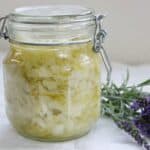
How to make Sauerkraut at Home
Disclosure: This post contains affiliate links, meaning, at no additional cost to you, we will earn a small commission if you click through and make a purchase. Learn more
- Home
- Recipes
- Fermented Food
- How to make Sauerkraut at Home
This sauerkraut, learned from a mother-in-law’s Swiss farmhouse tradition, is a simple way to preserve a cabbage harvest and add real probiotics to your diet.
Since a good cabbage harvest came in from the spring planting in July, cooking it all wasn’t realistic. Finding other ways to use up the garden’s abundance became necessary, and the best way to preserve that summer surplus for winter turned out to be learning how to make sauerkraut.
My husband grew up eating sauerkraut, learning how to make it by watching his mother as a kid. His mother kept a vegetable garden in a time before supermarkets stocked fresh cabbage and other produce year-round — whatever came from the summer garden had to be preserved for winter instead.
Table of Contents
Health Benefits of Sauerkraut
Fermented food has been a lifelong habit here, and a healthy gut and digestion are proof enough of that. Sauerkraut is a good source of probiotics thanks to its fermentation, which matters for gut health — the fiber and probiotics together support digestion and encourage healthy bowel flora, helping protect against various digestive tract issues.
A Farmhouse Tradition
This recipe traces back to a mother-in-law’s own farmhouse kitchen. Before supermarkets carried fresh produce year-round, whatever her family’s garden produced over the summer had to be preserved to last through winter — sauerkraut being one of the simplest, most reliable ways to do it. This particular recipe for 1kg of cabbage came together after a fair bit of researching, and can be scaled up or down depending on how much cabbage is on hand.
How to Make Sauerkraut at Home?
Ingredients List
- 1kg white cabbage
- 10g Himalayan pink salt
- 1 tsp whole coriander
- 1 tsp whole black pepper
Cooking Instructions
Prep the Cabbage:
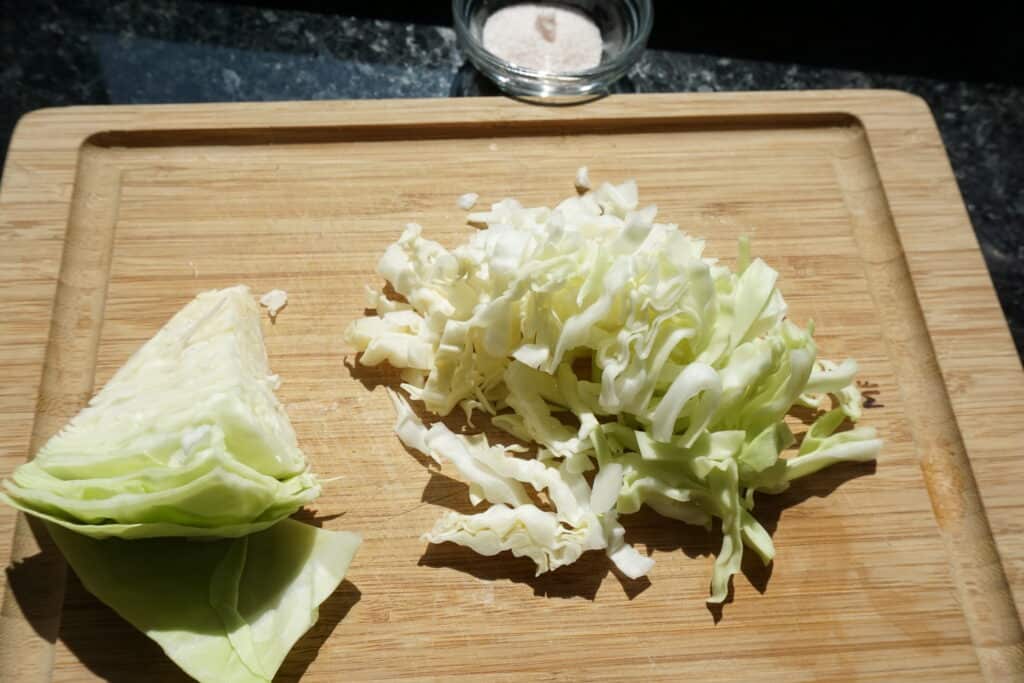
Halve the cabbages and remove the outer leaves, saving them for later. Quarter the cabbages and remove the hard center stem.
Grate:
Grate the cabbage with a food processor or hand grater. For a small quantity, just one cabbage, thin slicing works fine too.
Salt and Crush:
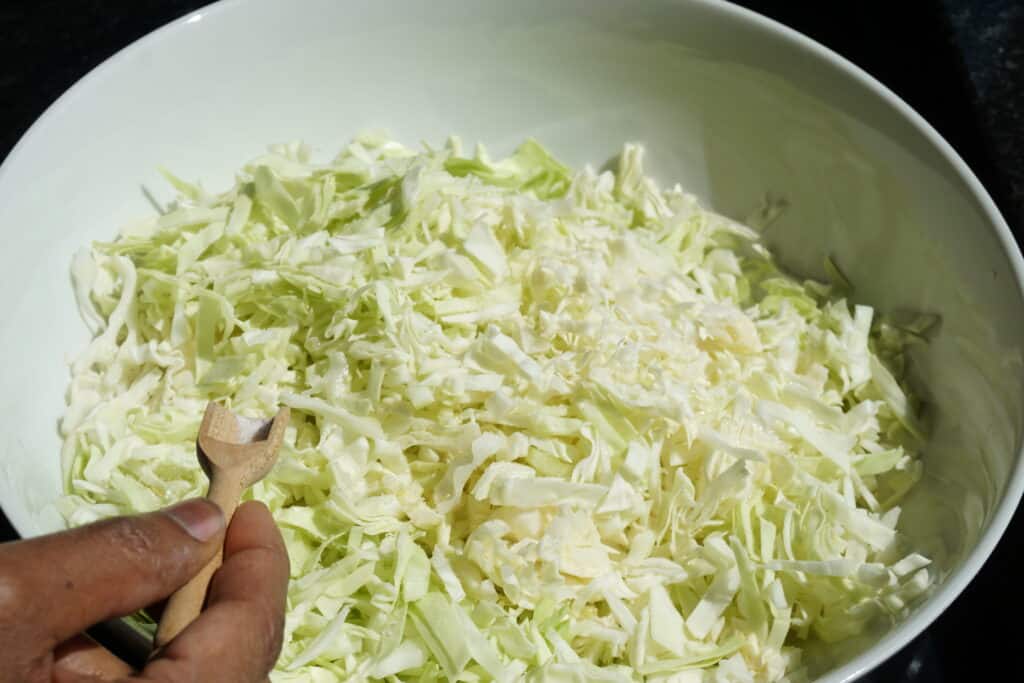
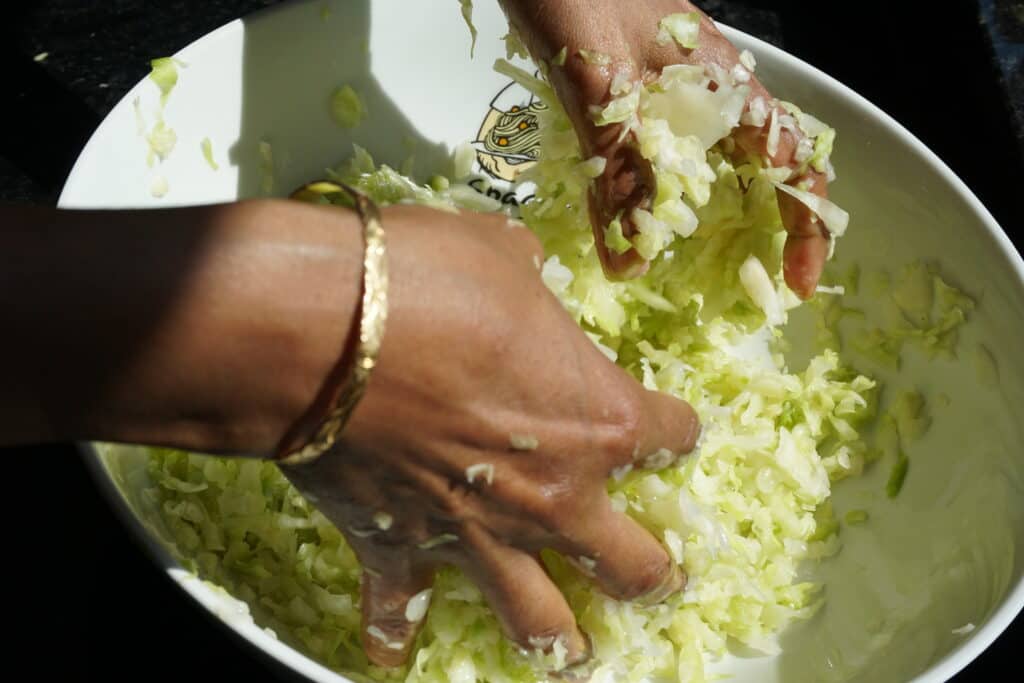
Add the grated cabbage to a large bowl with the salt, and crush it to extract the juice — the cabbage will be preserved in its own liquid. There’s no need to wash the cabbage beyond removing the outer leaves, since washing can destroy the good bacteria.
Add the Spices:
Once the cabbage is crushed enough to be oozing its juices, add the spices and mix well.
Pack the Jars:
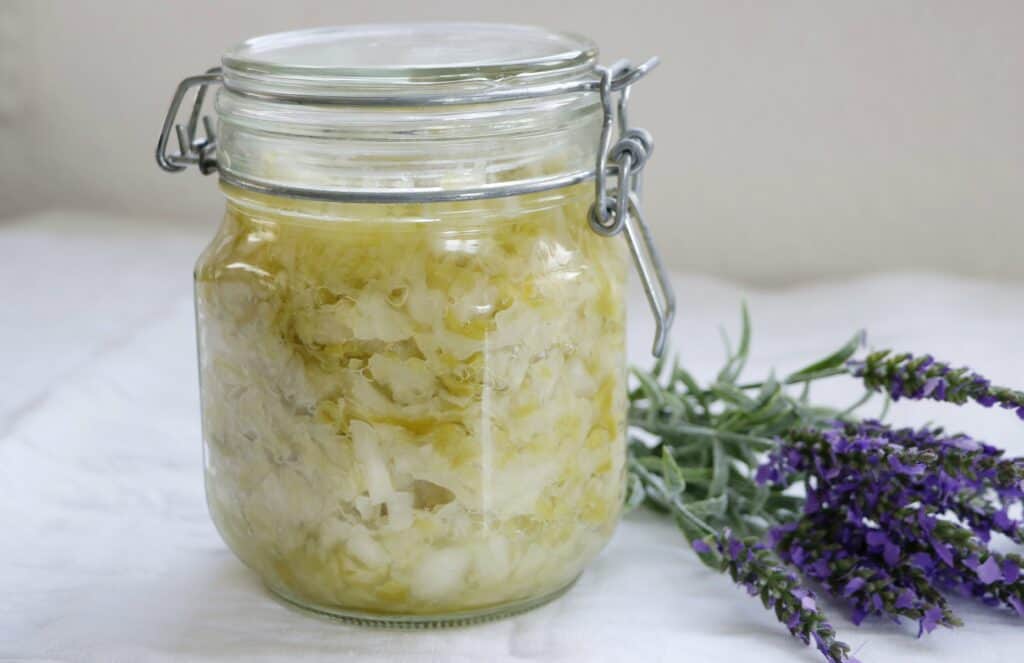
Fill sterilized, dry glass jars with the grated cabbage, then cover it with the outer leaves saved earlier. Make sure the cabbage stays fully covered in its own juices — if there isn’t enough, top it up with boiled and cooled salt water.
Weigh It Down:
Add a sterilized stone, or a small glass cup filled with salt water, to weigh the cabbage down and keep it submerged. Seal the jars.
Ferment:
Keep the jars at room temperature for 8 to 10 days, then move them to a cooler spot like a cellar. Don’t open the jars during this stage.
Serving Suggestions
Sauerkraut is easy to work into daily meals. Try it:
As a side: a simple way to add probiotics to any meal.
With sausages or hearty mains: a classic pairing in Swiss and German cooking.
Straight from the jar: a spoonful on its own is enough to get the benefit.
Tips to Make Sauerkraut
Use fermentation-specific lids if you can: special Mason jar lids with silicone vents let carbon dioxide escape as fermentation happens, while keeping the liquid intact.
Set jars in a bowl: fermenting cabbage can bubble over, so a bowl underneath catches any overflow.
Don’t wash the cabbage: beyond removing the outer leaves, skip washing — it can destroy the good bacteria needed for fermentation.
Keep everything submerged: a sterilized stone or a small glass cup filled with salt water works well to weigh the cabbage down under its own juices.
Watch the Video
Recipe Card
How to Make Sauerkraut – Swiss Farmhouse Recipe
- Total Time: 120
- Yield: 20 servings 1x
- Diet: Vegan
Description
A traditional Swiss farmhouse sauerkraut recipe, made with just cabbage and salt — an easy way to add probiotics to your diet and preserve a summer cabbage harvest.
Ingredients
- 1kg white cabbage, after removing the outer leaves
- 10g Himalayan pink salt (best to use non-fluoridated salt)
- 1 teaspoon whole coriander
- 1 teaspoon whole black pepper
Instructions
-
Prep the Cabbage:
Halve the cabbages and remove the outer leaves, saving them for later. Quarter the cabbages and remove the hard center stem.
-
Grate:
Grate the cabbage with a food processor or hand grater. For a small quantity, just one cabbage, thin slicing works fine too.
-
Salt and Crush:
Add the grated cabbage to a large bowl with the salt, and crush it to extract the juice — the cabbage will be preserved in its own liquid. There’s no need to wash the cabbage beyond removing the outer leaves, since washing can destroy the good bacteria.
-
Add the Spices:
Once the cabbage is crushed enough to be oozing its juices, add the spices and mix well.
-
Pack the Jars:
Fill sterilized, dry glass jars with the grated cabbage, then cover it with the outer leaves saved earlier. Make sure the cabbage stays fully covered in its own juices — if there isn’t enough, top it up with boiled and cooled salt water.
-
Weigh It Down:
Add a sterilized stone, or a small glass cup filled with salt water, to weigh the cabbage down and keep it submerged. Seal the jars.
-
Ferment:
Keep the jars at room temperature for 8 to 10 days, then move them to a cooler spot like a cellar. Don’t open the jars during this stage.
Notes
Since the liquid can bubble out of the jars while fermenting, it helps to set them in a bowl to catch any overflow.
- Prep Time: 60
- Cook Time: 60
- Category: Fermented Food
- Cuisine: Swiss
Nutrition
- Serving Size: 20
- Calories: 19
- Fat: 0.1

Your feedback is valuable
If you try this recipe and love it, I would love if you come back and gave it 5 stars! Thank you so much for visiting Vital Fair Living – we’re so happy you’re here! I would love it if you can share this recipe using the social media buttons you see next to the post.
Frequently Asked Questions
Washing beyond removing the outer leaves can destroy the good bacteria needed for fermentation, so it’s best skipped.
About 8 to 10 days at room temperature, before moving the jars to a cooler spot like a cellar. The jars shouldn’t be opened during this stage.
A sterilized stone or a small glass cup filled with salt water keeps the cabbage fully submerged in its own juices, which is essential for proper fermentation.