
10 tips for sustainable eating
Disclosure: This post contains affiliate links, meaning, at no additional cost to you, we will earn a small commission if you click through and make a purchase. Learn more
- Home
- Natural Living
- Sustainable Living
- 10 tips for sustainable eating
These 10 tips for sustainable eating trace back to a grandmother who lived through both world wars and wartime rationing — habits practiced here for decades, long before sustainability became a buzzword.
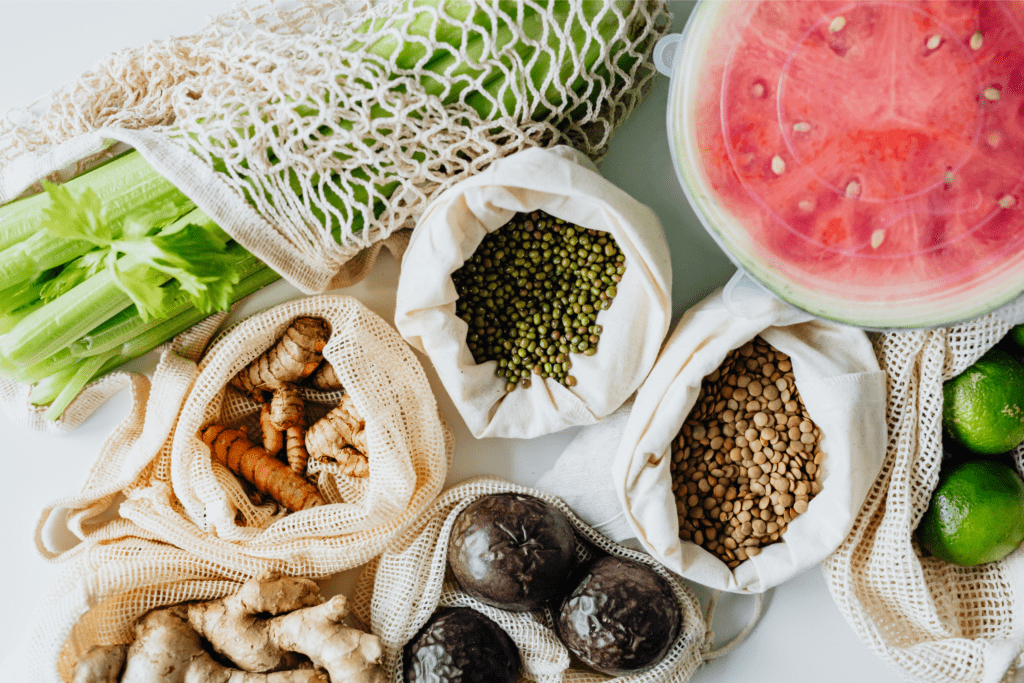
Food prices have been rising steadily, especially over the past year, but income in most cases hasn’t kept pace with inflation. Here are 10 favorite tips for sustainable eating on a budget, and how this household does its part for both health and the environment — practiced for decades now, well before it became a trend.
Being a conscious consumer has come naturally throughout life, growing up with a grandmother from very different times. A paternal grandmother, born in 1914, lived through both world wars and the Great Depression, experiencing food rationing after the second world war. Despite both grandmothers coming from affluent families, food rationing touched them directly — a shared experience for so many families who lived through those difficult decades.
A maternal grandmother passed on long before there was a chance to know her. Early childhood was spent living with the paternal grandmother instead, so those firsthand memories and lessons run deep — she never wasted anything, and she taught a genuinely frugal, conscious way of living. More on her story may come in a future post.
Table of Contents
What Is Sustainability?
Sustainability, broadly speaking, means living and consuming in ways that don’t harm the environment or use up its resources faster than they can be replenished, so that ecological balance holds up over the long term. “Conscious sustainable living” feels like the more honest term to use these days, since “sustainable” has become such a loosely applied buzzword, picked up and used in so many different ways by so many different people that its original meaning can get a little lost. The goal here is simply to stay informed and practice what makes sense, without following any particular trend or hype.
What Is Sustainable Eating?
Sustainable eating looks different for everyone. For some, it means eliminating animal products entirely; for others, it’s choosing organic, seasonal, local produce, composting everything, and cutting down on food waste. Whatever habits feel right to build, taking them on one small step at a time makes the biggest difference.
1. Buy Only What You Will Eat
Disclosure: This post contains affiliate links, meaning, at no additional cost to you, we will earn a small commission if you click through and make a purchase. Learn more
It’s a genuinely difficult choice with all the different food options available while shopping today. A few decades back, most people ate only what they knew how to cook and what was locally available — no media or social media nudging food choices in a hundred directions at once, or advertising food that never actually gets cooked. Getting adventurous with a new ingredient can backfire too — if no one at home likes it, finishing it off becomes the only way to avoid waste. These days, food choices stay limited on purpose, buying only what the whole family genuinely likes and eats, and stocking up accordingly.
2. Buy Local and in Season
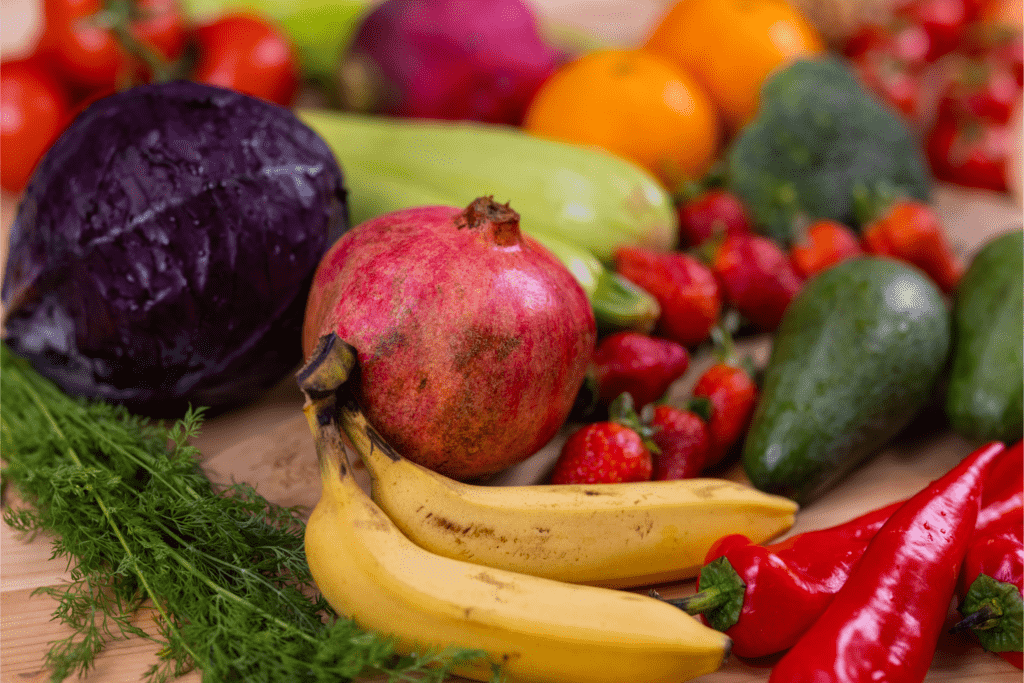
Buying local, in-season produce is one of the best habits for sustainable eating. Supporting local farmers and visiting farmers markets brings fresh, in-season food to the table. Out-of-season produce has to be shipped from far away, adding real energy costs for shipping and packaging — and it can mean depriving someone else, somewhere, of that same food.
Cooking has adapted over the years to suit whatever’s locally grown, especially with a home garden supplying much of what gets eaten in season. Fruits and vegetables imported from far away often get picked before they’re ripe, for easier transport, then artificially ripened before reaching stores — a different experience altogether from something picked ripe and eaten close to where it grew. Dr. Zach Bush’s work is worth a look for anyone curious to dig deeper into this topic.
Tip: eating local and seasonal food adds real flavor too.
3–6. Planning, Buying, and Organizing
Supplies List
- 1. Buy only what you’ll eat
- 2. Buy local & in season
- 3. Plan meals & make lists
- 4. Buy in bulk & on offer
- 5. Organize fridge & pantry
- 6. Eat more plant-based
- 7. Grow your own food
- 8. Eat whole foods
- 9. Use up leftovers
- 10. Shop with reusable bags
Instructions
3. Make Lists and Meal Plans Before Food Shopping:
For anyone just starting out with cooking or sustainable eating habits, planning ahead helps — a weekly meal plan, shopped for accordingly, with room to adjust the menu as needed. No formal meal plans happen here except for weekends, since a meal can usually be rustled up from the pantry and fridge even when they’re nearly empty. Weekends get the special treatment, cooking something extra for family and friends — a chance to pass these same 10 tips down to a daughter too. Making lists before shopping helps keep food waste contained as well.
4. Reduce Food Bills: Buy on Offer and in Bulk:
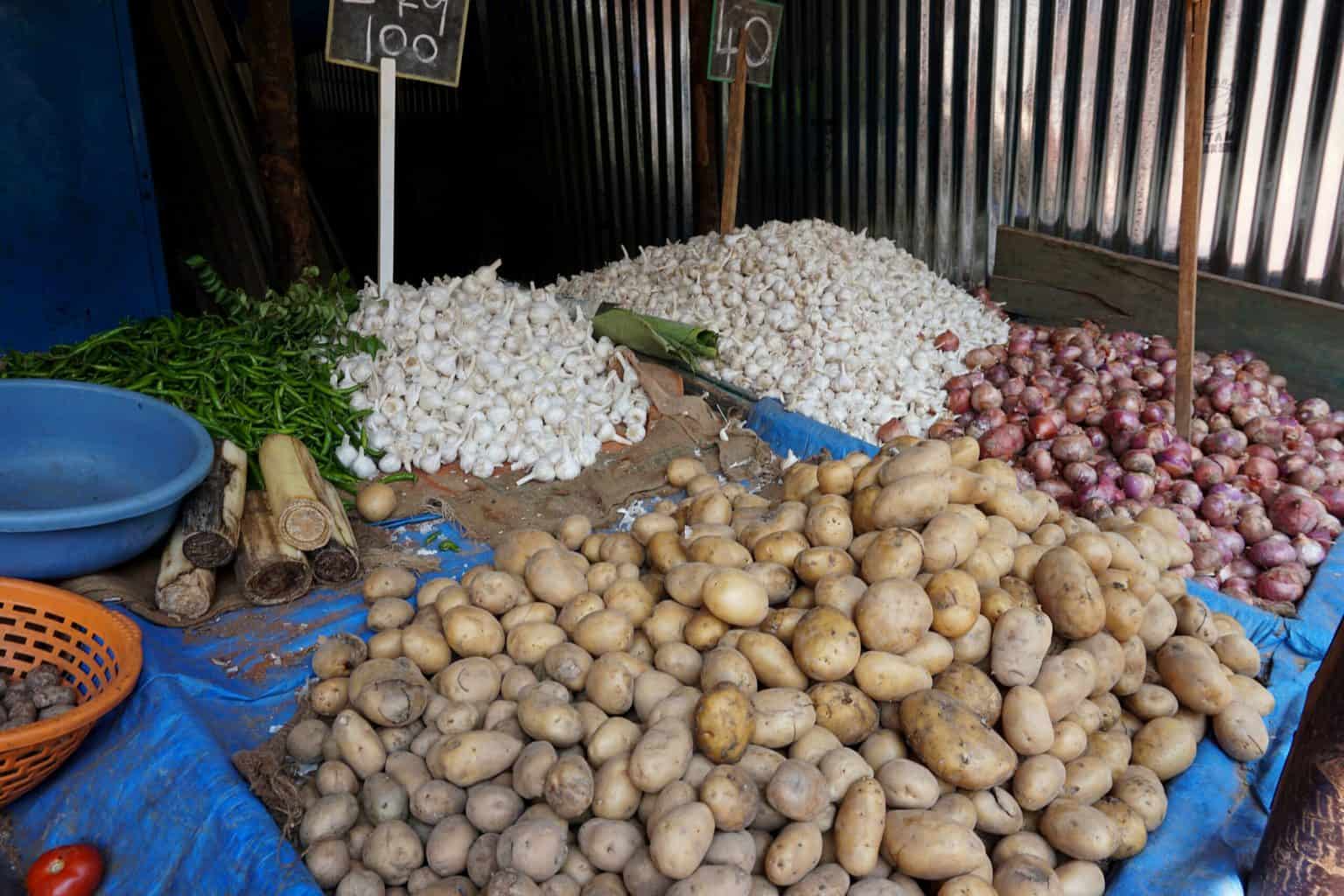
Buying in bulk and on offer works well for longer-shelf-life foods like dry goods, oils, and spices. Cooking from scratch, paired with bulk buying, adds up to real savings on the food bill — a way to eat organic, whole foods sustainably without compromising on quality. Shopping just before the weekend is a good time to catch fresh food markdowns too, since stores often discount berries, overripe fruit, and vegetables to avoid throwing them out. Much of that unsold produce would otherwise land in a waste bin, so buying it and turning it into smoothies or soups makes good use of it — berry season especially brings good markdowns, perfect for jams and smoothies.
5. Organize the Fridge and Pantry:
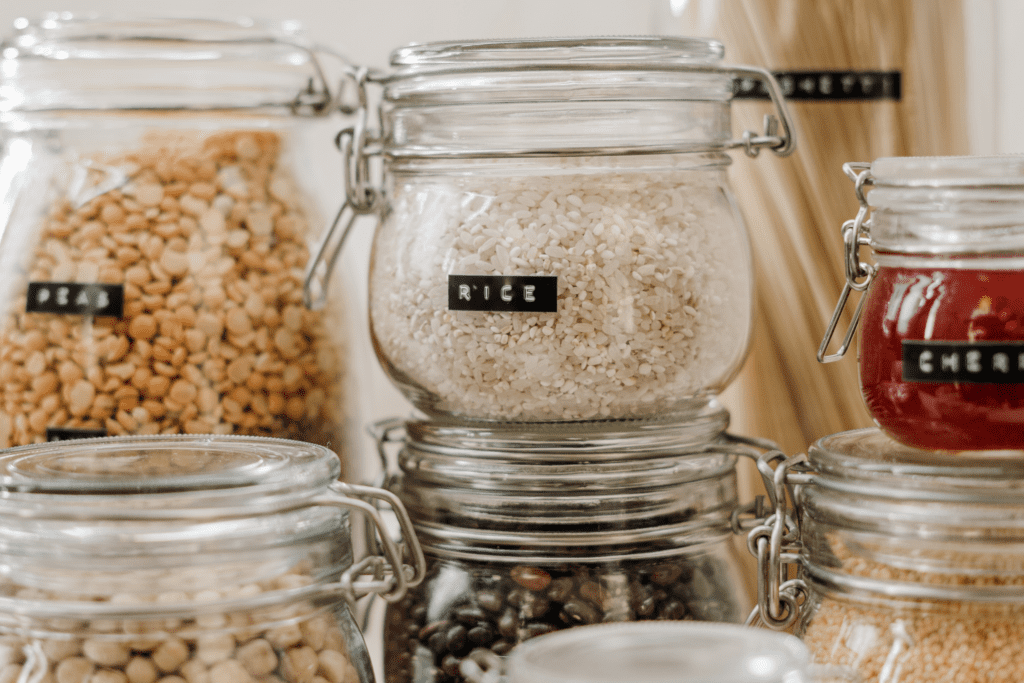
A clear system in the pantry — organizing dry foods by date, old ones in front, new ones at the back — makes a real difference. With a long-term storage pantry too, foods due to be used soon get moved to the kitchen pantry, making it easy to track what needs using. The fridge runs on a similar system: fresh vegetables stored only in Tupperware fridge-smart containers, keeping garden produce fresher for longer and giving a clear overview of what’s on hand. Since fresh, seasonal garden produce gets picked and used quickly, there’s hardly any waste at all — and any excess gets preserved through canning.
6. Eat a More Plant-Based Diet:
The meat industry is a heavy consumer of water, energy, and grain, and doesn’t contribute much to sustainable farming or eating, whether for the environment or the household budget. Raised vegetarian, though without any interest in dictating anyone else’s food choices — still, leaning toward a more plant-based diet, even for omnivores, means more food available to feed more people. Hunger remains a real problem in many parts of the world, often made worse when countries end up exporting grain for the meat industry under international trade deals, which is part of why cutting back on meat consumption feels like a genuinely worthwhile choice.
7. Grow Your Own Food
7. Top Sustainable Eating Tip: Grow Your Own Food. Planting a garden, even in a small space, makes a real difference — a few pots can easily grow a little food. Gardening is genuinely therapeutic, and it connects you directly to what ends up on the plate. This might be the single best of these 10 tips: it means eating locally grown, in-season produce, wasting less, and picking fruit at its ripest, tastiest, most nutrient-rich point.
8–9. Whole Foods and Leftovers
8. Eat organic whole foods where possible: cooking from scratch and avoiding ready-to-eat meals is good for both health and the environment — prepackaged foods run expensive, carry preservatives to extend shelf life, and add to packaging waste on top of it all.
9. Get creative with leftovers: an odd carrot, a few beans, or a soft potato can easily become a soup with some lentils thrown in, or cooked vegetables and leftover pasta can turn into burgers, served with homemade bread. Cooking just enough for each meal means leftovers are rare here, but compost handles whatever food waste is unavoidable — great for the garden, and in Switzerland, communal compost bins are available even for those without a garden of their own.
10. Shop with Reusable Containers and Bags
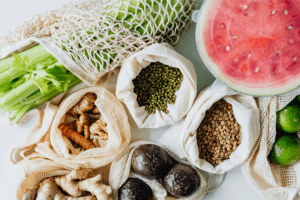
Reusing shopping bags has been a habit long before sustainability became a buzzword — a grandmother used to sew her own tote bags from leftover bed covers and sheets to take shopping, a resourcefulness that only grows more appreciated with time. Buying fresh produce loose at the farmers market works well too, with reusable net bags handy for keeping things separated in the fridge once back home. Bottled beverages get skipped entirely here in favor of a Berkey water filter for cooking and drinking water — genuinely economical too. Homemade berry syrups paired with a refillable soda machine round out the drinks at home.
Your feedback is valuable
Have some feedback you’d like to share? Leave a note in the comment section below! Thank you so much for visiting Vital Fair Living – we’re so happy you’re here! and thanks for taking the time to read my top 10 tips for sustainable eating post. I would love it if you can share this post using the social media buttons.
Frequently Asked Questions
Out-of-season produce has to be shipped from far away, adding real energy and packaging costs — and imported fruits and vegetables are often picked underripe and artificially ripened, unlike something picked ripe and eaten close to where it grew.
Odd vegetables and small amounts of leftovers can become soups with lentils added, or cooked vegetables and pasta can be turned into burgers — cooking just enough for each meal also helps keep leftovers to a minimum in the first place.
Reusable bags and containers cut down on packaging waste and are a genuinely economical habit — buying fresh produce loose at a farmers market and using net bags to separate it in the fridge works especially well.


Loving this! Dedicated my blog to the all important cause of sustainable eating, learnt a lot from this – thank u for sharing!
Thanks. Love that more and more people are getting aware.
Loved this! I too feel that sustainable eating is so important (so much so, I dedicated my blog n Instagram to it haha). Thank u for this! Learnt a lot ❤️
Thank you for your kind comment. So much meaning to going back to the old ways which I never gave up.