Sharing is caring

Disclosure: This post contains affiliate links, meaning, at no additional cost to you, we will earn a small commission if you click through and make a purchase. Learn more

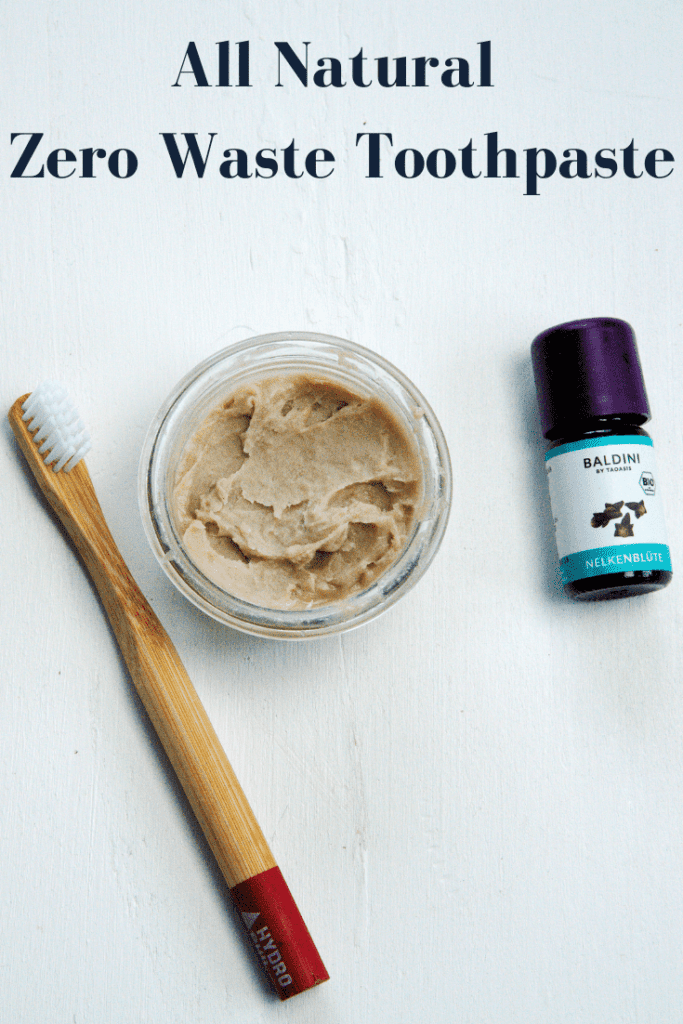
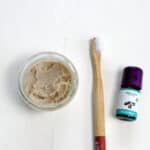
These two all natural, zero waste toothpaste recipes trade a longtime habit of buying pricey, fluoride-free Weleda toothpaste for something homemade, cheaper, and genuinely waste-free.

All Natural zero waste tooth paste

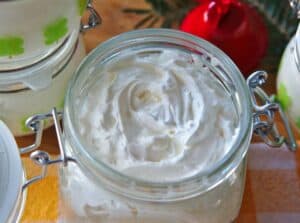
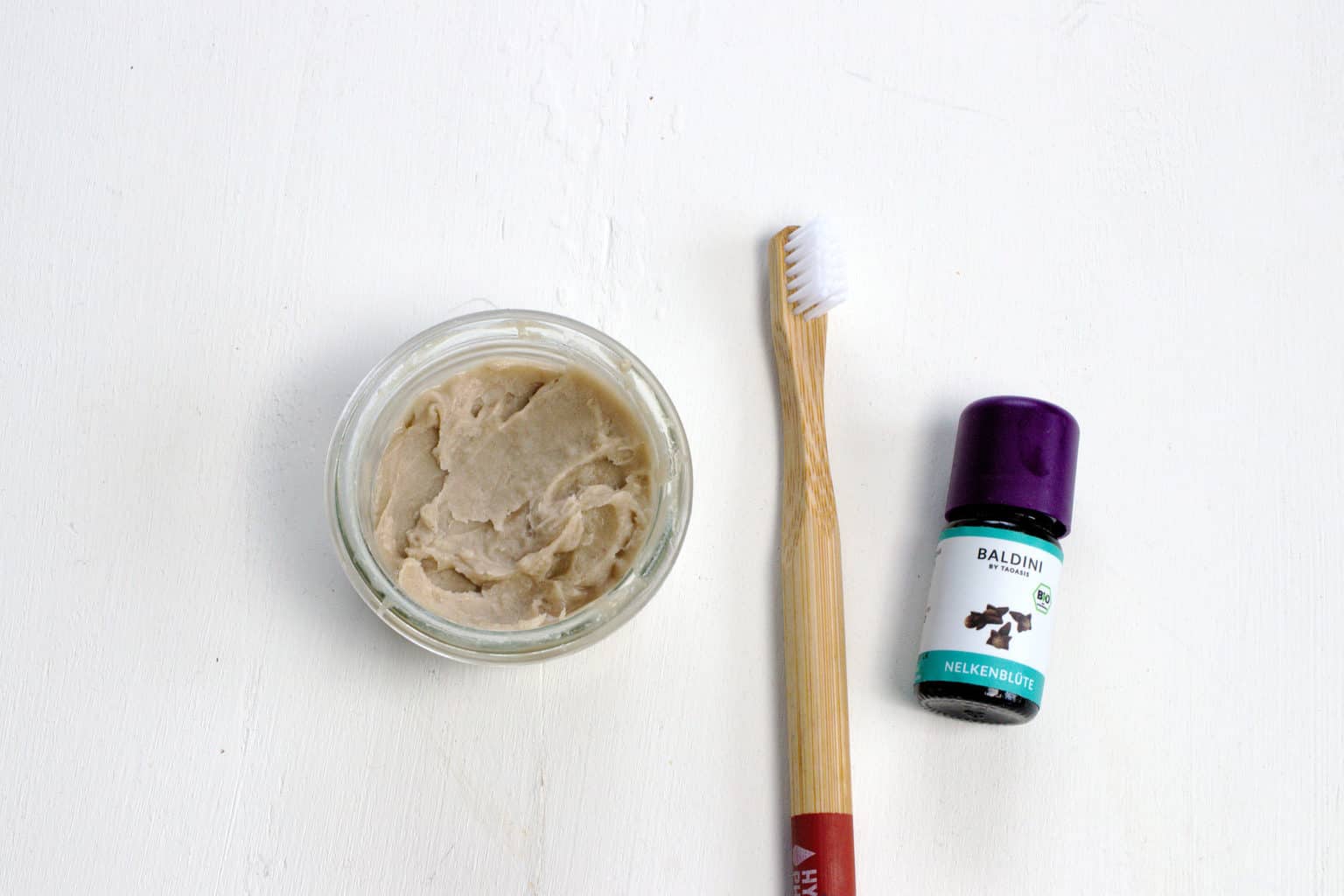
Brush your teeth with an all natural zero waste toothpaste made with essential oils and a minimum of ingredients. It’s so easy to make, whipped up in about 10 minutes.

For the past few decades, buying organic and chemical-free toothpastes had become a real expense — and beyond the cost, all those throwaway commercial toothpaste tubes added up to a lot of waste. That’s what led to switching over to making personal care products at home instead.

Table of Contents

Why Make Your Own Toothpaste?

Reduce waste: Weleda toothpaste was the go-to for years — a good option since it’s organic, natural, and fluoride-free, though on the pricey end at around 6 CHF for a 150ml tube. Despite being recyclable, all those empty tubes still added up over time.

Cut costs: cutting costs has become a real priority in recent years, and making toothpaste at home is a straightforward way to do it.

Fluoride-free: given the negative effects fluoride can have on health and wellbeing, keeping it out of toothpaste is a deliberate choice.

Chemical and preservative free: beyond fluoride, commercial toothpastes often include ingredients like sodium lauryl sulfate, triclosan, sodium benzoate, and other active ingredients — not exactly what belongs in the body.

All Natural Zero Waste Toothpaste Ingredients

Disclosure: This post contains affiliate links, meaning, at no additional cost to you, we will earn a small commission if you click through and make a purchase. Learn more

Two oil-based toothpaste recipes are shared here.

The Ingredients, One by One

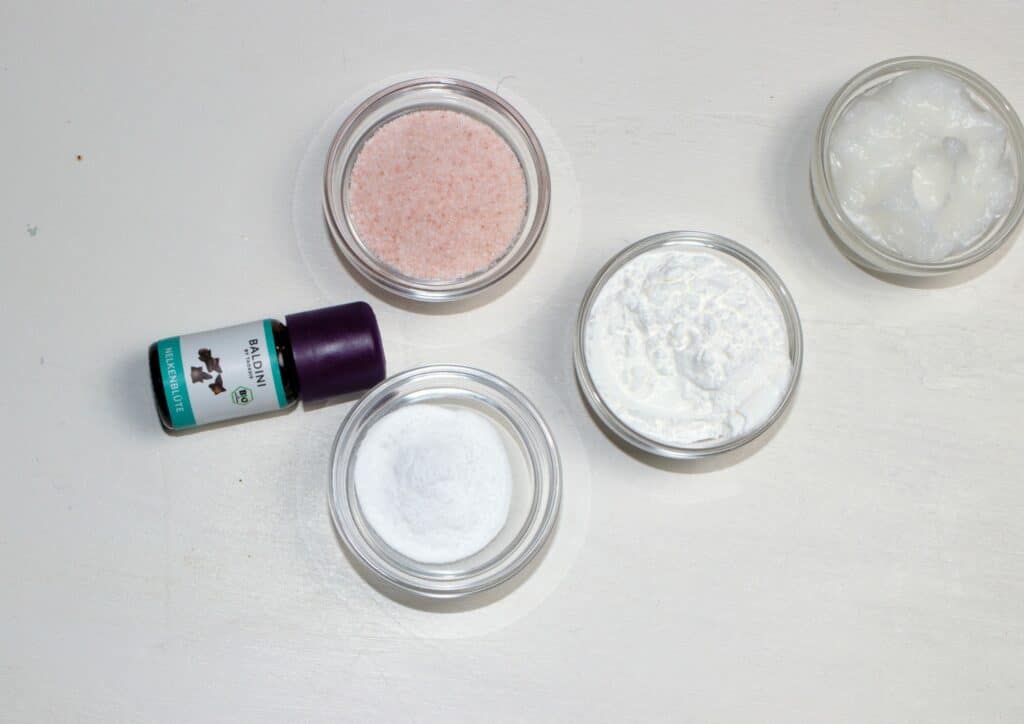
Ingredients List

  • Coconut oil
  • Arrowroot powder
  • Baking soda
  • Himalaya pink salt
  • Bentonite clay
  • Essential oils

Cooking Instructions

  • Coconut Oil:

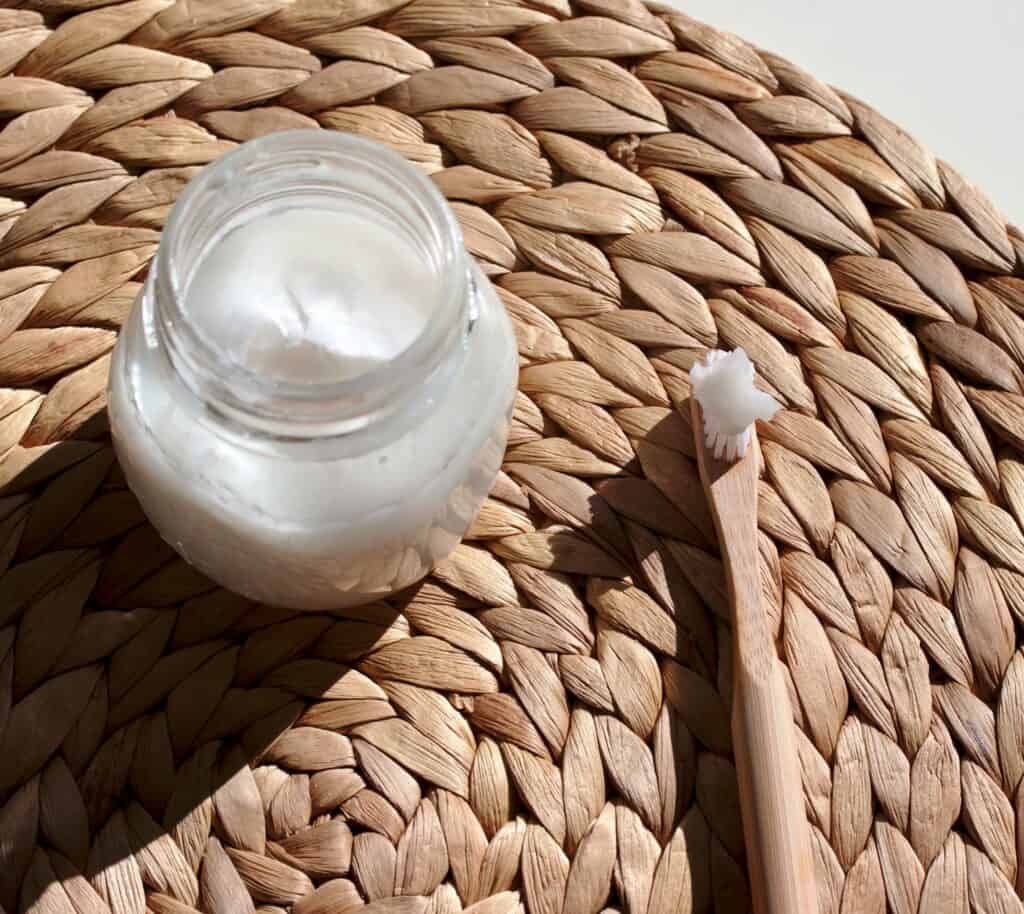
    Coconut oil shows up in most skin care recipes here, and it’s the most commonly chosen oil for oil-based toothpaste too, thanks to its antibacterial and anti-fungal properties. During winter, coconut oil stays solid, giving a thicker toothpaste; in summer, the texture runs thinner, which is where other ingredients come in to keep things easy to use.

  • Baking Soda:

    Baking soda, which contains sodium bicarbonate, shows up in a lot of toothpastes. Some studies suggest it has a better whitening and plaque-removal effect than toothpaste without it. With a pH of 9, baking soda also helps preserve the toothpaste, and its alkalinity can help neutralize acids in the mouth, supporting the fight against cavities.

  • Arrowroot Powder:

    Arrowroot is a starch obtained from the rhizomes of several tropical plants, traditionally Maranta arundinacea among other varieties. Since it’s gluten free, it’s a popular wheat flour replacement, though it’s relatively high in carbohydrates and low in protein (around 7.7%), so it can’t substitute for wheat flour in breads. It thickens at a lower temperature than flour or cornstarch, and its neutral taste makes it perfect here, helping thicken the toothpaste alongside the coconut oil.

  • Himalaya Salt:

    Himalaya salt has gained real popularity thanks to its rich mineral content and health benefits.

  • Bentonite Clay:

    Bentonite clay is a great addition to homemade toothpaste, since it helps give it the right consistency.

Essential Oils

Essential oils bring a nice smell in addition to their aromatherapy benefits. A few worth using: peppermint, which freshens breath and leaves the mouth feeling clean; clove, known for powerful cleansing and purifying properties, and widely used for toothache too; eucalyptus, which has natural anti-microbial and antiseptic properties, safe at a low dosage; and cinnamon, which can freshen breath and naturally whiten teeth.

Tips to Make Zero Waste Toothpaste

Use fractionated coconut oil in winter: this keeps the consistency more stable when regular coconut oil would otherwise solidify.
Store in glass jars: plastic can leach into essential oils and coconut oil over time, so glass is the safer choice.
Choose oils meant for internal use: use essential oils that are pure and specifically safe for this kind of application.

Where to Source These Ingredients

A reader based in Switzerland once asked where to find these ingredients locally, especially without speaking German. Coconut oil and some essential oils are usually easy to track down, but the rest — arrowroot powder, bentonite clay, Himalaya salt — can be harder to source locally, which is exactly why the links above are worth using directly.

Watch the Video

All natural zero waste toothpaste

Recipe Card

Print
clock clock iconcutlery cutlery iconflag flag iconfolder folder iconinstagram instagram iconpinterest pinterest iconfacebook facebook iconprint print iconsquares squares iconheart heart iconheart solid heart solid icon
All Natural zero waste tooth paste

All Natural Zero Waste Toothpaste


5 Stars 4 Stars 3 Stars 2 Stars 1 Star

No reviews

  • Total Time: 10
  • Yield: 50 servings 1x

Description

Two easy all-natural, zero-waste toothpaste recipes made with essential oils and minimal ingredients — fluoride-free, chemical-free, and ready in about 10 minutes.


Ingredients

Scale
  • Recipe 1:

  • 1/2 cup coconut oil
  • 1/2 cup arrowroot powder
  • 34 teaspoons baking soda
  • 12 teaspoons Himalaya pink salt
  • 20 drops peppermint essential oil
  • 10 drops clove essential oil
  • 10 drops eucalyptus essential oil (optional)
  • Recipe 2:

  • 4 tablespoons coconut oil
  • 2 tablespoons baking soda
  • 1 tablespoon bentonite clay
  • 1 tablespoon arrowroot powder
  • 5 drops peppermint essential oil
  • 5 drops clove essential oil

Instructions

Both recipes follow the same steps.

  • Mix the Dry Ingredients:

    Mix all the dry ingredients into a bowl and set aside.

  • Melt the Coconut Oil:

    Melt the coconut oil on low heat.

  • Combine:

    Add the coconut oil into the dry ingredients a little at a time, mixing well until there are no lumps.

  • Add Essential Oils:

    Add the essential oils and mix.

  • Store:

    Store in sterilized glass jars.

Notes

Use fractionated coconut oil during winter for a more stable consistency. Store in glass, since plastic can leach into essential oils and coconut oil. Use essential oils that are pure and safe for internal use.

  • Prep Time: 5
  • Cook Time: 5
  • Category: Natural Skin Care

Nutrition

  • Serving Size: 50
  • Calories: 0.1
  • Fat: 3
Your feedback is valuable

Did you like this All Natural Zero Waste Toothpaste recipe? Have you tried making your own toothpaste? Leave me a comment, I’d really love to know! Thank you so much for visiting Vital Fair Living – we’re so happy you’re here! Thanks for taking the time to read this post. I would love it if you can share this recipe using the social media buttons you see next to the post and give this recipe a 5 star rating.

Frequently Asked Questions

Baking soda’s alkalinity helps neutralize acids in the mouth and may support whitening and plaque removal, while its pH of 9 also helps preserve the toothpaste itself.

Plastic containers can leach into essential oils and coconut oil over time, so glass jars are the safer, longer-lasting choice.

Yes — the first recipe here skips bentonite clay entirely and relies on arrowroot powder and coconut oil for consistency instead.

Leave a Reply
0 0 votes
Article Rating
Subscribe
Notify of
guest
2 Comments
Oldest
Newest Most Voted
Raja Rajeshwari V R
Raja Rajeshwari V R
5 years ago

Hi mam,
I am currently living in Switzerland. Thanks for providing great content… Could you pls let me know grow where can I source the ingredients? I am recently moved into switzerland and I donno German as well..so I find difficult to source these ingredients