Top 3 reasons to build a greenhouse
Disclosure: This post contains affiliate links, meaning, at no additional cost to you, we will earn a small commission if you click through and make a purchase. Learn more
- Home
- Home & DIY
- DIY Tutorials
- Top 3 reasons to build a greenhouse
After a successful year with a temporary greenhouse, it was time to build a permanent one — here are the 3 main reasons why, plus the full construction process, step by step.
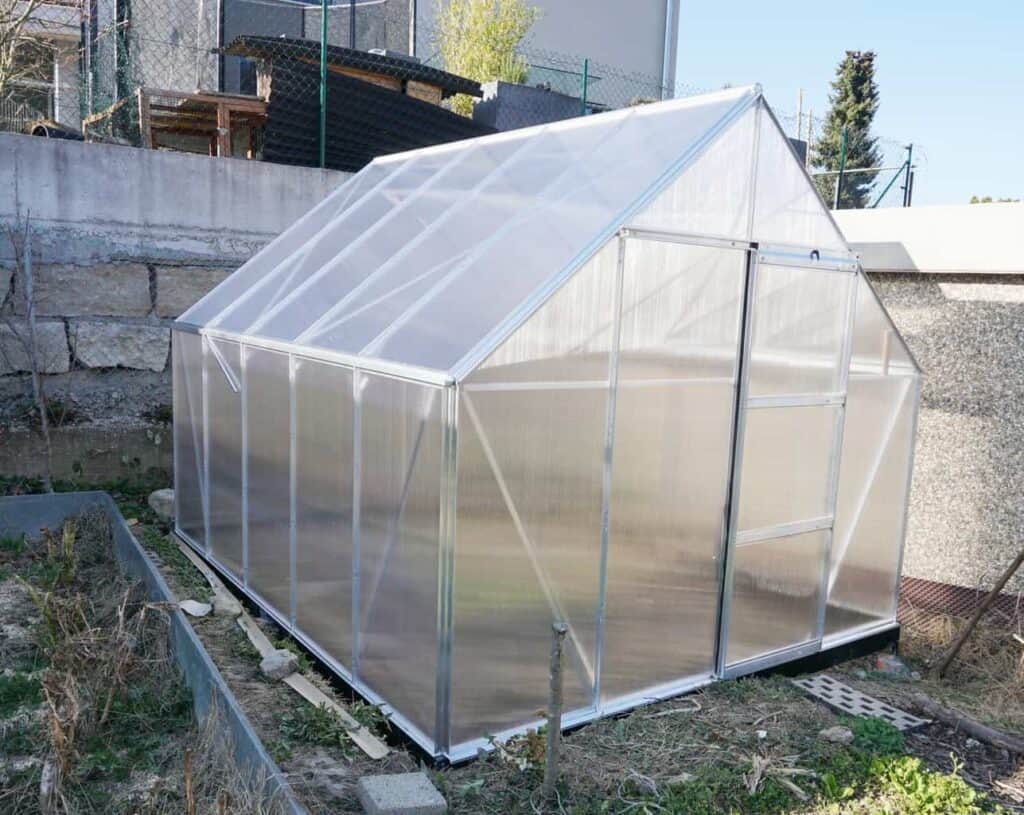
After a successful gardening year in 2018 with the help of a temporary greenhouse, it was time to build a new, permanent one. There are plenty of reasons to build a greenhouse, or a hot house as it used to be called in days gone by. This post covers the 3 main reasons behind building this one, along with a few subsidiary reasons tied to each.
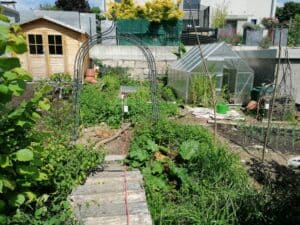
Switzerland’s building laws are strict, and with a stream running through the plot, things get even more complicated. Around the same time, a neighbor built a garden shed right next to the property, which gave some hope that a new permanent greenhouse wouldn’t run into objections from the planning authorities.
Table of Contents
1. Extending the Growing Season
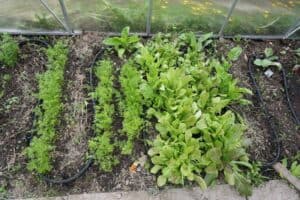
In a cold climate, the window when the garden is most productive is short — a greenhouse stretches that season out. It also means growing saplings at home rather than relying on nurseries and garden centers, avoiding those wasted trips chasing the right plants and coming back empty-handed, which has happened more than once. With seeds in hand, germinating and growing them inside the greenhouse can start well ahead of schedule, ready to plant once the weather warms up.
2. Growing More Exotic Produce
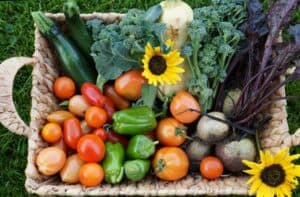
Most of what’s grown here sticks to locally thriving fruits and vegetables, but sometimes variety calls for more exotic vegetables that need extra warmth and sunlight. The success of the temporary greenhouse the year before made investing in a permanent structure an easy decision — tomatoes, bell peppers, and other vegetables were still being harvested right up until the third week of November.
3. Real Cost Savings
The upfront cost of building a greenhouse can be high, but it’s worth thinking of as a long-term investment. Factoring in the money saved on store-bought seedlings, vegetables, and flowers, the investment tends to pay for itself before long — with the extended growing season adding even more savings on top. A sheltered glass space transforms the germination process too, making it possible to raise hundreds of new plants for a fraction of what they’d cost to buy.
Constructing the Greenhouse, Step by Step
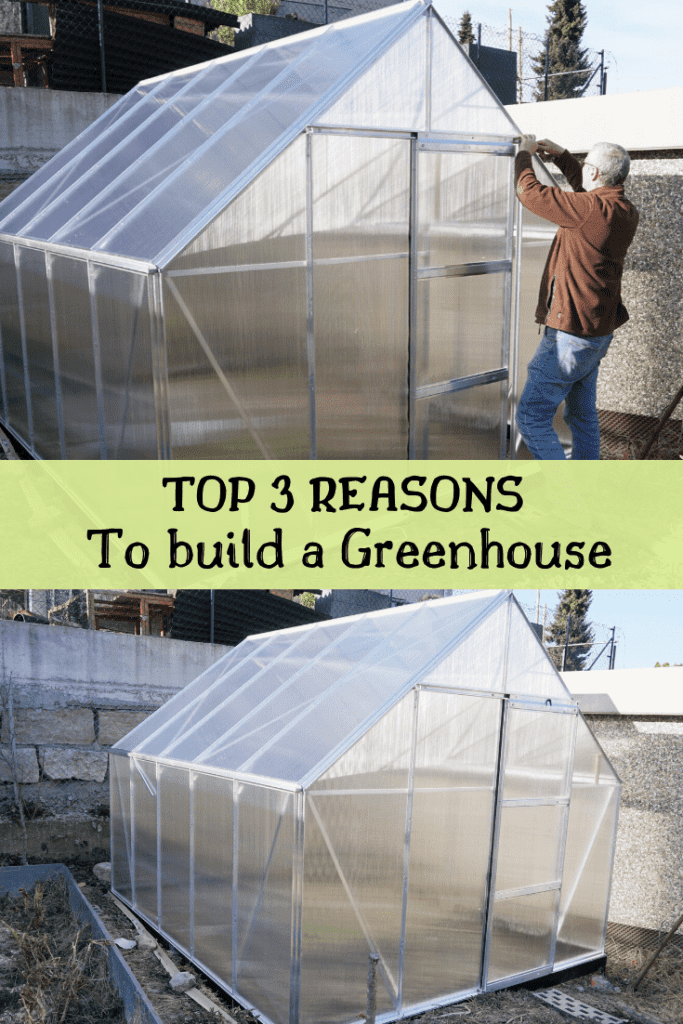
Supplies List
- Aluminium frame kit (from Hornbach)
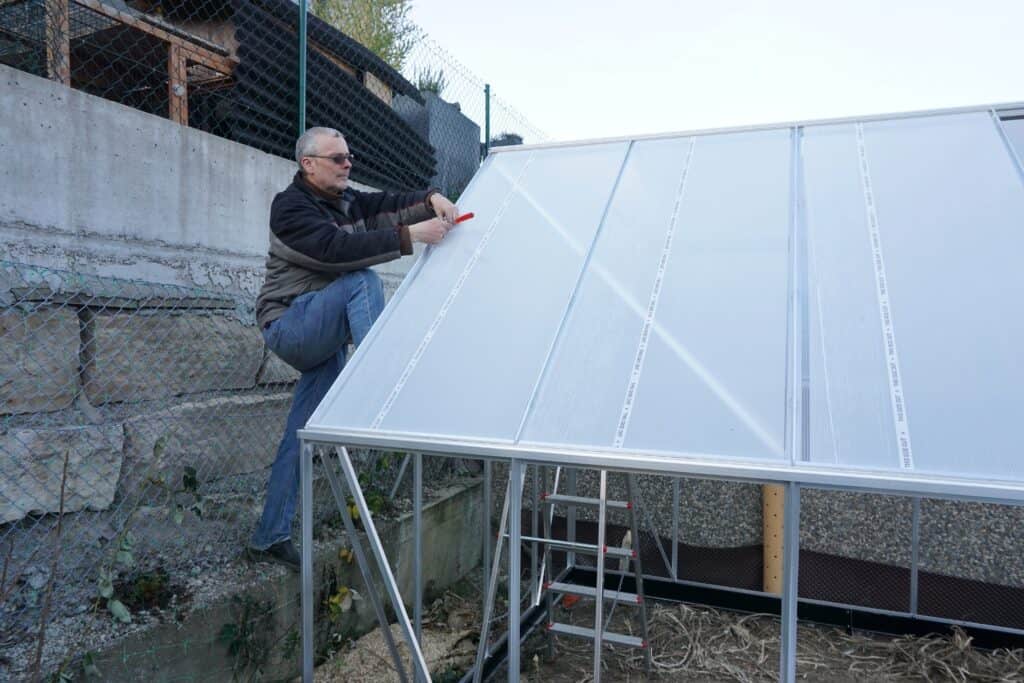
- 6mm opaque fiberglass panels
- 6 PVC pipes (for the foundation)
- Quick-fix concrete
- Thermic window levers
Instructions
Step 1 – Mark Out the Foundation:
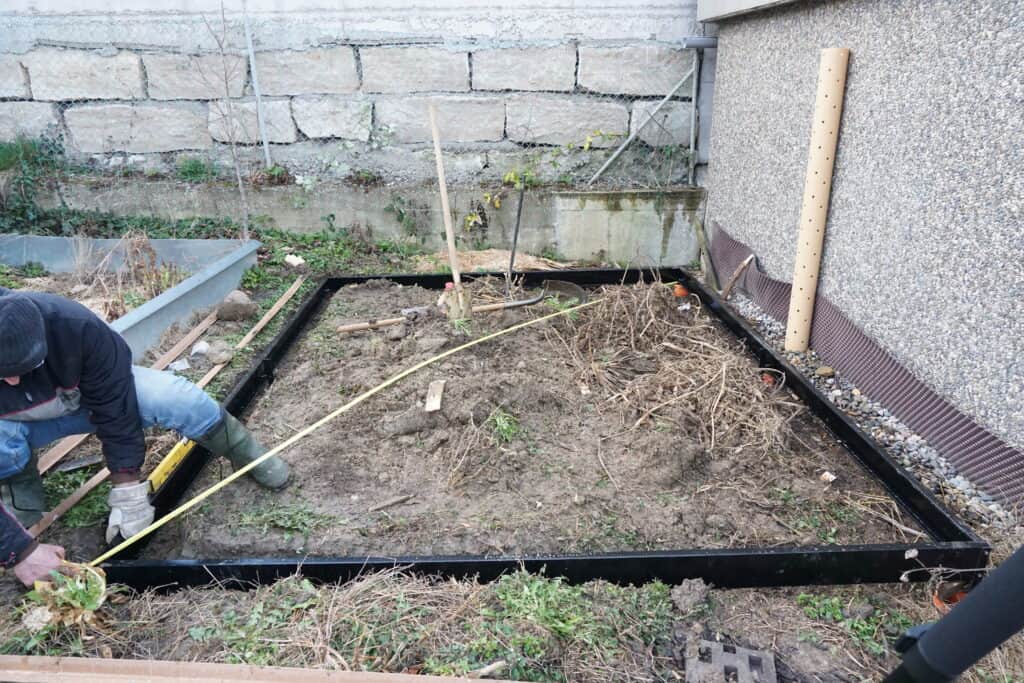
The ground was cleared where the foundation would go, chosen for the spot with the most sunlight during the day — the west side of the plot, in this case. Measuring and re-measuring several times was essential, since getting the dimensions right is what keeps the frame stable once it’s all together.
Step 2 – Dig the Foundation:
Digging began for the frame’s 6 supporting legs. The ground was still hard and only just thawing from a long winter, even well into mid-March, which made digging genuinely tough going.
Step 3 – Set the Legs:
Six PVC pipes went in first to hold the frame’s legs, which were then bent into place for solid support. Quick-fix concrete was poured in and mixed with water, then left to set for 24 hours.
Step 4 – Build the Frame:
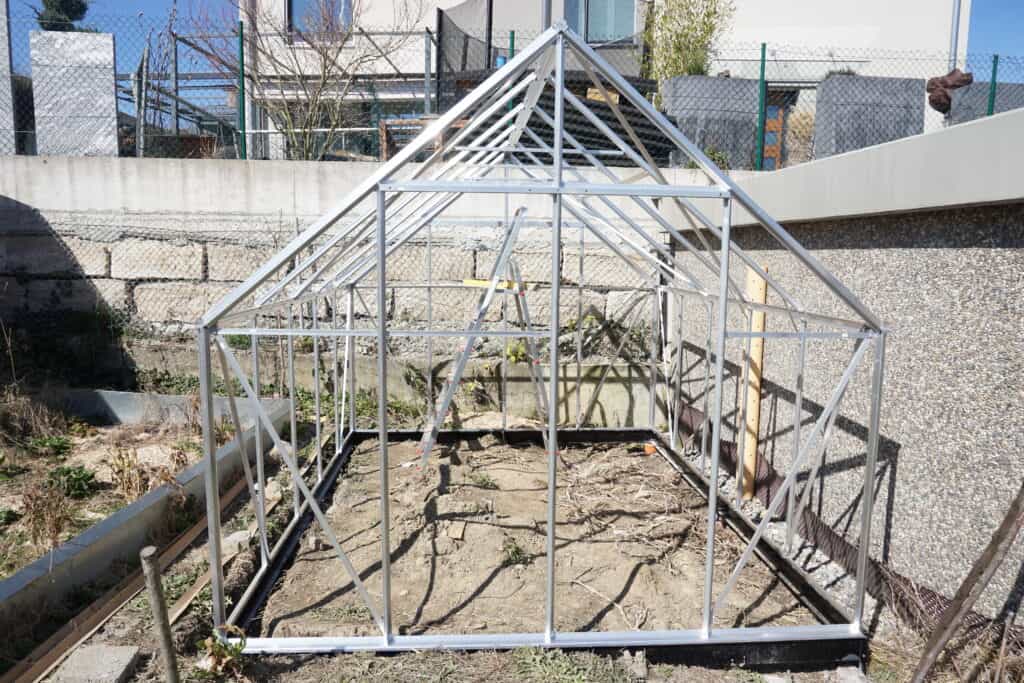
The aluminium framework went up next, fixed onto the foundation. The instructions weren’t especially clear, which made this a genuinely complicated step — but with the right skills, the frame came together and fit well, without much further adjustment needed.
Step 5 – Fix the Glass Panels:
The final step was fitting the glass panels into the aluminium frame and securing them into their slots — again, not especially well explained in the instructions, but it all came together in the end, ready for planting.
Watch the Full Build
The full build is also covered in this video, start to finish.
Choosing the Right Materials
Choose your panel type by purpose: clear panels suit germinating seeds and starters, since they let in direct light that warms the soil and encourages sprouting — opaque panels are better for growing crops long-term, since they spread light more evenly for balanced growth.
Measure more than once: getting the frame’s dimensions exactly right the first time keeps the whole structure stable later.
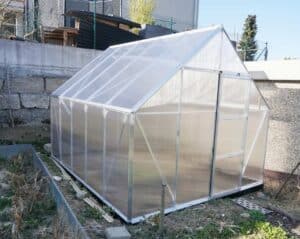
Budget realistically: this greenhouse, sized 257×322cm (8.3 square meters), came to around 1700 CHF including extras.
Why We Chose Opaque Panels
The previous year’s temporary greenhouse, built to test the waters given Switzerland’s strict building laws, managed to last until autumn — though by mid-autumn it was already getting difficult to keep the structure stable. After searching through a lot of different sizes online, a suitable one turned up at Hornbach.
Clear vs. Opaque Panels
Choosing the right panel clarity comes down to what’s being grown. Clear panels work well for germinating seeds and starters headed outdoors later, since the direct light warms the soil and encourages sprouting. Opaque panels, chosen here, spread light more evenly and suit growing crops to maturity over the longer term.
Managing the Temperature Swings
Extreme temperature swings needed accounting for too — below-zero nights outside against much warmer conditions inside the greenhouse. A thermic lever fitted to the windows helps manage this automatically, opening once the inside reaches a certain temperature and closing again as it cools. For early spring nights when the temperature still isn’t stable enough to move plants outside, a lit candle inside has been enough to keep it from dropping below zero, holding steady around 6°C overnight.
These 3 reasons aren’t the only ones for building a greenhouse. Gardening has become a real passion over the past 3 years — a kind of mindful meditation, a way to get closer to nature, fresh air, and exercise, all at once. Creating a micro tropical climate inside the greenhouse also makes planning next year’s garden easier, right from germination through to planting.
Watch the Video
Your feedback is valuable
Thank you for taking the time to read this post.
Frequently Asked Questions
It depends on the goal: clear panels give direct light that warms the soil and helps seeds germinate, while opaque panels spread light more evenly, which suits growing crops to maturity over the long term.
A thermic lever on the windows helps regulate temperature automatically, and on colder spring nights, a single lit candle inside has been enough to keep the temperature from dropping below zero.
Yes, over time — the money saved on store-bought seedlings, vegetables, and flowers, plus the benefit of an extended growing season, tends to recoup the initial investment before long.