
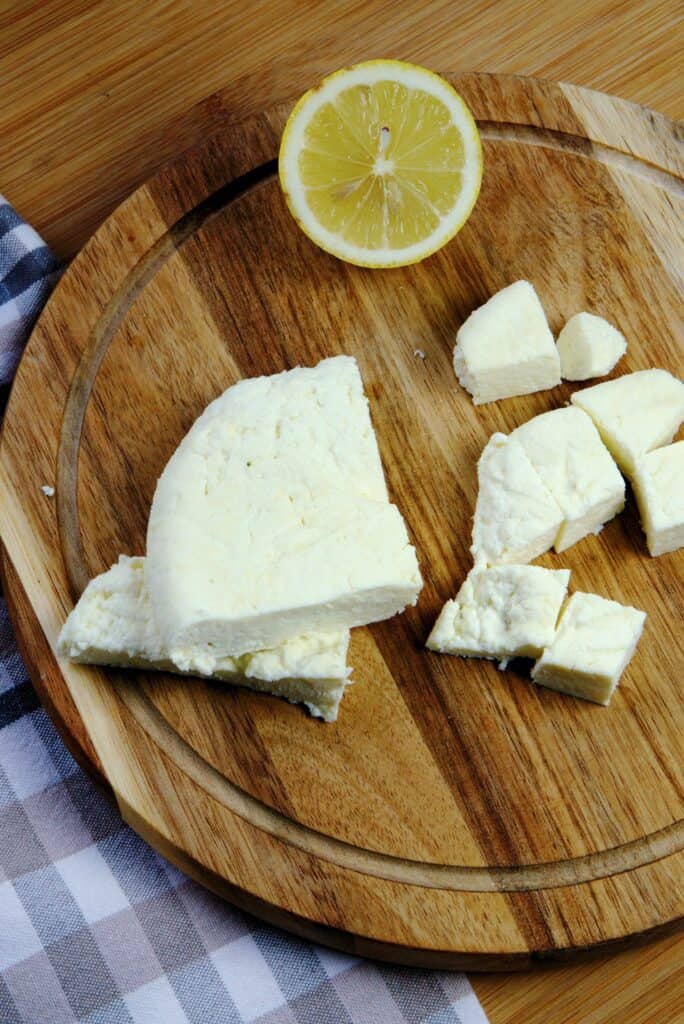

How to make Paneer from Raw Milk
Disclosure: This post contains affiliate links, meaning, at no additional cost to you, we will earn a small commission if you click through and make a purchase. Learn more
Learn how to make paneer — a soft, rennet-free cottage cheese from India — at home from raw milk, with just a food acid and a little patience.
Learn how to make paneer from raw milk, a soft cottage cheese from India, which is prepared by curdling hot milk without the use of rennet. You can make it from scratch at home with a minimum of effort and ingredients.
I was browsing through the recipes on my blog recently and realized that I haven’t shared one of my favorite recipes here. I shared a recipe using paneer sometime back, but not how to make it. Therefore, this recipe needs a post of its own. My video tutorial on the YouTube channel, which I posted 2 years back, has had many thousands of views and is still going strong.
Table of Contents
What Is Paneer?
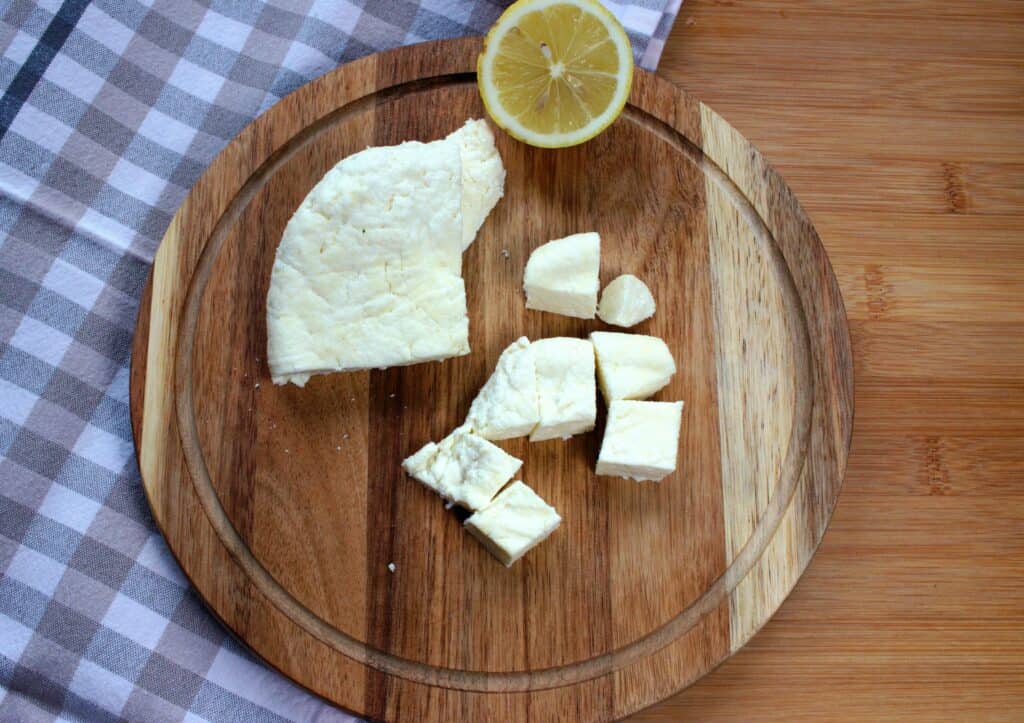
Paneer is a popular cottage cheese from the northern region of India. It’s a fresh, non-melting cheese made by curdling hot milk with a food acid, which separates the curds from the whey. Unlike most cheese recipes, which use rennet as a coagulating agent, paneer is rennet-free — making it an ideal choice for strict lacto-vegetarians.
What Food Acids Can You Use?
In India, lemon juice, citric acid, vinegar, or sour curds are commonly used. Leftover whey water from an earlier batch of paneer works too. For the best texture, use full-fat raw milk — it gives dense, soft curds.
Tools you may need
Disclosure: This post contains affiliate links, meaning, at no additional cost to you, we will earn a small commission if you click through and make a purchase. Learn more
- Cheese Cloth
- Heavy bottom pot
- A weight for pressing
How to Make Paneer from Raw Milk?
Ingredients List
- Raw milk – 1 liter
- Juice of a small lemon (about 2 tbsp)
- Thin muslin or cheese cloth
- Heavy bottom pot
- A weight for pressing
Cooking Instructions
Boil the Milk:
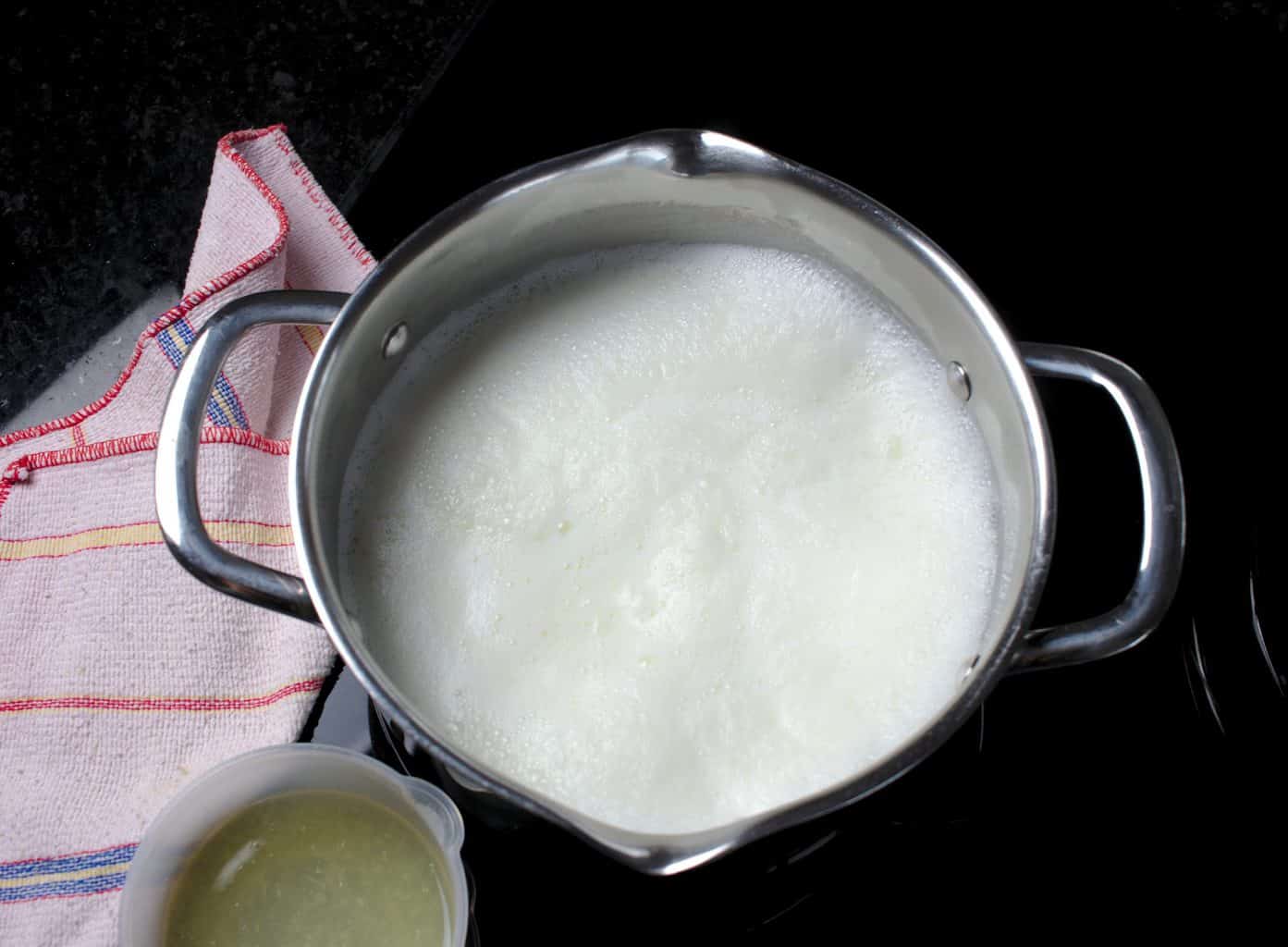
In a heavy bottom pan, bring the milk to a boil, then switch off the heat. Watch it closely so it doesn’t boil over.
Add the Lemon Juice:
Add the lemon juice gradually, a little at a time — don’t add it all at once.
Watch for Curdling:
Once the milk curdles and separates, stop adding the lemon juice.
Strain the Curds:
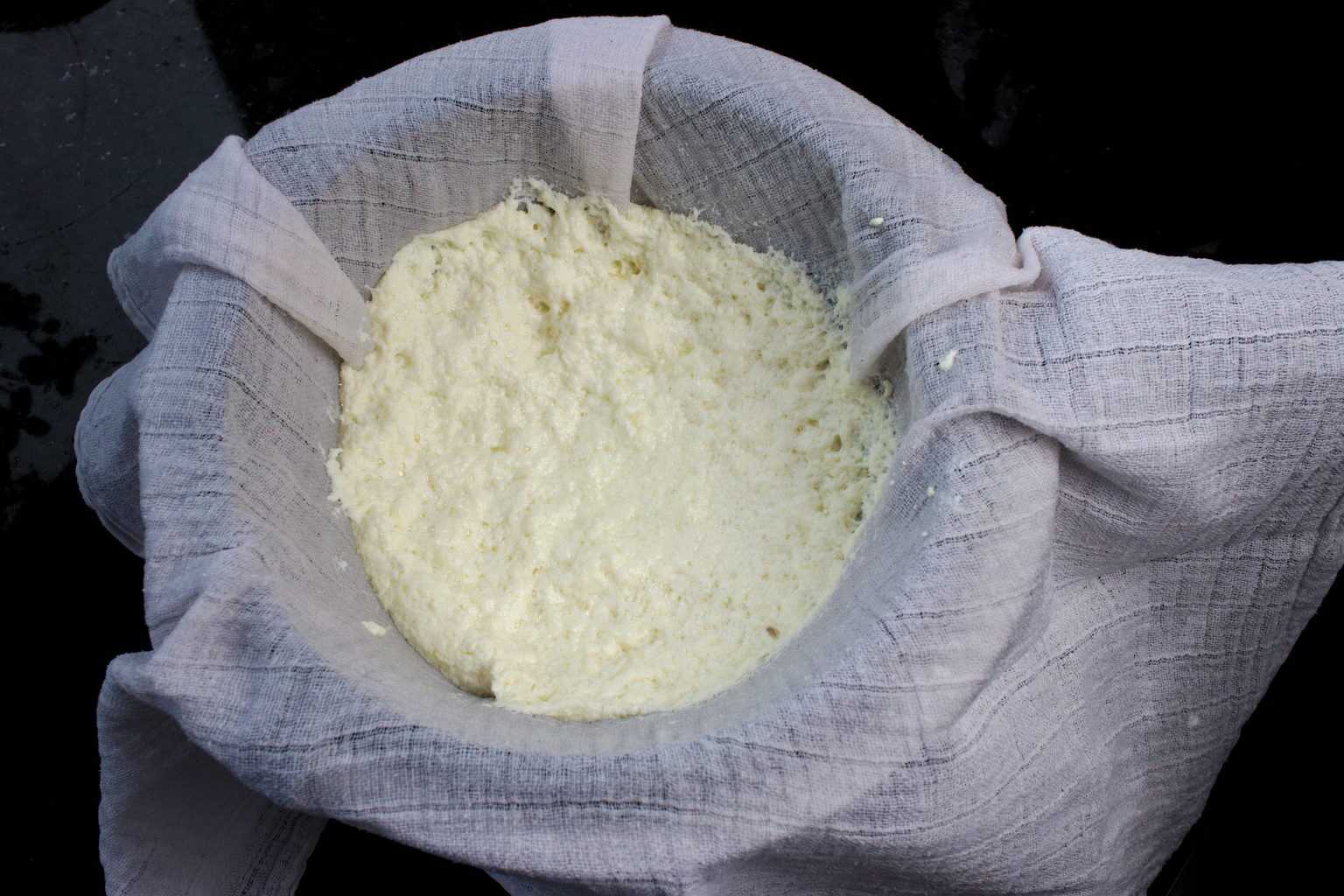
Pass the curds through a thin muslin cloth to strain out the whey.
Press:
Bundle up the curds and press under a heavy weight for about 10 minutes for a softer cheese — the pot of whey itself works well as a weight. For a harder paneer, press for about 30 minutes.
Serving Suggestions
Paneer works in both sweet and savory dishes. Try it:
In a hearty bake: like a paneer potato dauphinois.
On a sandwich: with a little black Himalayan salt and pepper.
On pizza or in pastry: pizza rolls and puffs both work well.
Top Tips to Make Paneer
Use full-fat raw milk: it gives the densest, softest curds.
Use fresh milk: nothing older than 2 days — old milk can cause bloating or even food poisoning.
Add the acid to boiling milk: this gives thicker curds.
Make it creamy: add ½ cup full-fat heavy cream to the milk along with 2 tbsp vinegar or lemon juice.
Save the whey: use fresh whey water in soups or rice, or drink it.
How Long Can You Store Paneer?
Refrigerating: paneer keeps in the fridge for up to 4 days — submerge it in the whey water to keep it fresh, soft, and moist.
Freezing: paneer can be frozen, but the texture turns slightly powdery once thawed, so it’s best made fresh and used quickly.
Use it up fast: old paneer can cause an upset stomach, so it’s best not to store it for more than 3 days.
Ways to Flavor Paneer
Once you’ve made the base paneer, there’s room to adapt it:
Herbed paneer: knead in chopped herbs or crushed black pepper before pressing.
Spiced paneer: add a pinch of chili flakes or turmeric to the curds.
Creamy paneer: stir in a little heavy cream with the food acid for an extra-soft, rich texture.
Why Paneer Is Rennet-Free
Because paneer is made without rennet, it’s a good option for strict lacto-vegetarians who want to avoid cheese made with rennet extracted from a calf’s stomach lining — a concern that leads many to buy cheese made with microbial or synthetic rennet instead. Making paneer at home sidesteps that question entirely, since it’s coagulated with just a food acid.
Watch the Video
Recipe Card
How to Make Paneer from Raw Milk
5 Stars 4 Stars 3 Stars 2 Stars 1 Star
No reviews
- Total Time: 25
- Yield: 4 servings
- Diet: Vegetarian
Description
A soft, rennet-free cottage cheese made at home from raw milk and a squeeze of lemon juice — simple, traditional, and ready in well under an hour.
Ingredients
- Raw milk – 1 liter
- Juice of a small lemon (about 2 tbsp)
- Thin muslin or cheese cloth
- Heavy bottom pot
- A weight for pressing
Instructions
-
Boil the Milk:
In a heavy bottom pan, bring the milk to a boil, then switch off the heat. Watch it closely so it doesn’t boil over.
-
Add the Lemon Juice:
Add the lemon juice gradually, a little at a time — don’t add it all at once.
-
Watch for Curdling:
Once the milk curdles and separates, stop adding the lemon juice.
-
Strain the Curds:
Pass the curds through a thin muslin cloth to strain out the whey.
-
Press:
Bundle up the curds and press under a heavy weight for about 10 minutes for a softer cheese — the pot of whey itself works well as a weight. For a harder paneer, press for about 30 minutes.
Notes
Refrigerate for up to 4 days, submerged in the whey water to keep it moist. Paneer can be frozen but turns slightly powdery once thawed, so it’s best used fresh within a few days.
- Prep Time: 15
- Cook Time: 10
- Category: Side Dishes
- Cuisine: Indian
Nutrition
- Serving Size: 4
- Calories: 265
- Fat: 20

Your feedback is valuable
If you try this recipe and love it, I would love if you come back and gave it 5 stars! Thank you so much for visiting Vital Fair Living – we’re so happy you’re here! I would love it if you can share this recipe using the social media buttons you see next to the post.
Frequently Asked Questions
You can, but the texture turns slightly powdery once thawed — it’s best to make paneer fresh and use it within a few days rather than freezing it.
Traditional paneer is coagulated with a food acid like lemon juice instead of rennet, which makes it suitable for strict lacto-vegetarians who avoid animal-derived rennet.
Yes — fresh whey water can be used right away in soups or for cooking rice, or simply drunk on its own.